• Product
  • Suppliers
  • Manufacturers
  • Solutions
  • Free tools
  • Knowledges
  • Experts
  • Communities
Search


Free Expert Guides on Power Systems, Circuit Design & Electrical Troubleshooting

Access free engineering resources from IEE Business—covering power design, circuit layout, equipment selection, and troubleshooting. Expert-developed guides help engineers, procurement, and project teams make better decisions. Stay ahead on smart grids, renewables, efficiency, and AI tools. Improve reliability, reduce downtime, and enhance outcomes with real-world solutions. Explore our knowledge hub today.
What Is a Power System Bushing and Its Types for Transformers?
In electrical power systems, a bushing is an insulating device that allows an electrical conductor to pass safely through a grounded conductive barrier, as in the case of transformers or circuit breakers. All transformer windings are connected to high-voltage lines, so special attention must be paid to the terminal connections to prevent flashover between the high-voltage terminals and the transformer body. In low-voltage distribution transformers, cable connections are made within a terminal bo
08/07/2025
Consult
Tip
Consult
Tip
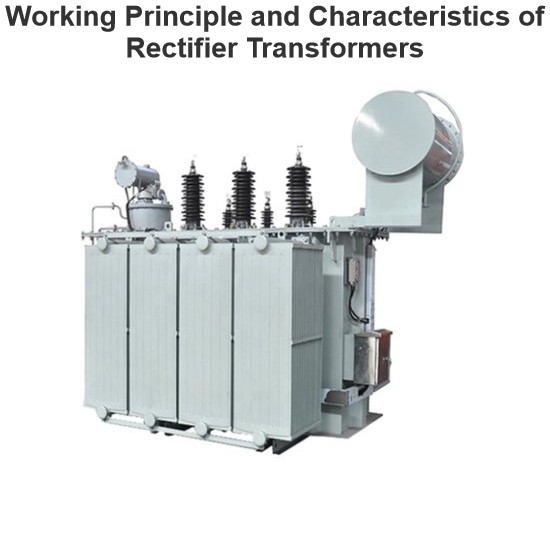
Working Principle and Characteristics of Rectifier Transformers
Working Principle of Rectifier TransformersThe working principle of a rectifier transformer is the same as that of a conventional transformer. A transformer is a device that converts AC voltage based on the principle of electromagnetic induction. Typically, a transformer consists of two electrically isolated windings—the primary and secondary—wound around a common iron core. When the primary winding is connected to an AC power source, the alternating current generates a magne
08/07/2025
Consult
Tip
Consult
Tip
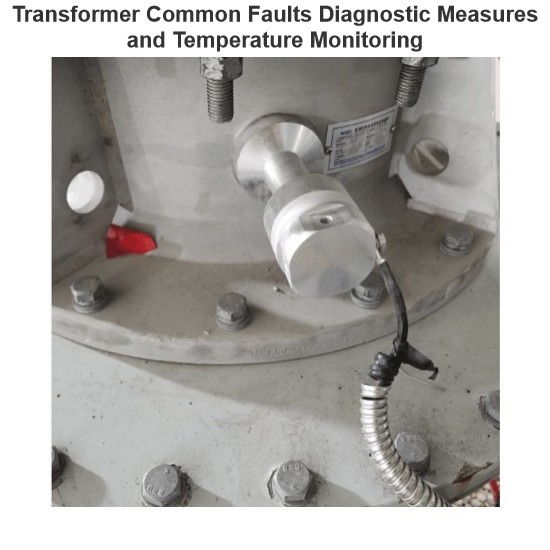
Transformer Common Faults Diagnostic Measures and Temperature Monitoring
1.Common Faults and Diagnostic Measures1.1 Transformer Oil Leakage1.1.1 Oil Leakage from Tank Weld SeamsFor oil leakage at flat joints, direct welding is applicable. For leakage at corners or joints reinforced with stiffeners, the exact leakage point is often difficult to locate, and re-leakage may occur after welding due to internal stress. For such cases, repair welding with an added iron plate is recommended: for two-surface joints, the iron plate can be cut into a spindle shape for welding;
08/07/2025
Consult
Tip
Consult
Tip
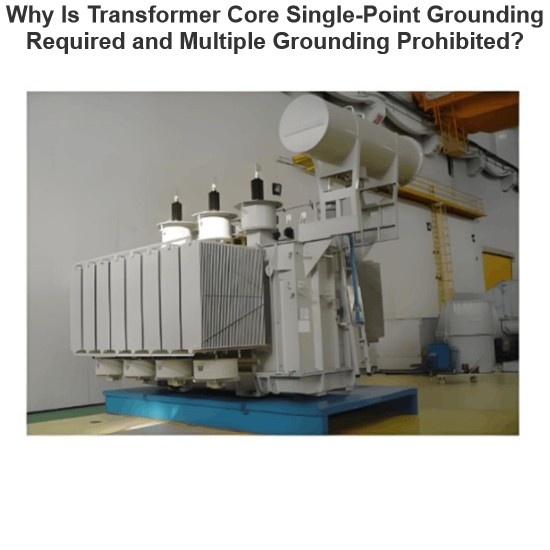
Why Is Transformer Core Single-Point Grounding Required and Multiple Grounding Prohibited?
During transformer operation, the core and the metallic structures and components that secure the core and windings are exposed to a strong electric field, inducing a high potential relative to ground. If the core is left ungrounded, a potential difference can develop between the core and grounded parts such as clamps and the tank, leading to intermittent discharges. Additionally, the magnetic field surrounding the windings induces varying electromotive forces (EMF) in different metallic compone
08/07/2025
Consult
Tip
Consult
Tip
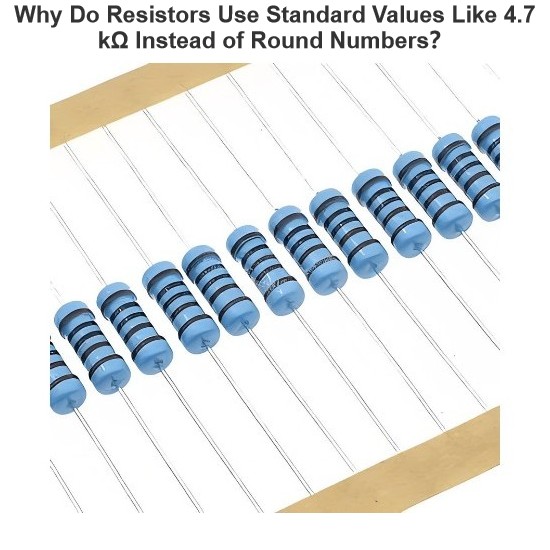
Why Do Resistors Use Standard Values Like 4.7 kΩ Instead of Round Numbers?
Many beginners in circuit design may find standard resistor values puzzling. Why are common values like 4.7 kΩ or 5.1 kΩ instead of round numbers such as 5 kΩ?The reason lies in the use of an exponential distribution system for resistor values, standardized by the International Electrotechnical Commission (IEC). This system defines a series of preferred values, including the E3, E6, E12, E24, E48, E96, and E192 series.For example: The E6 series uses a ratio of appro
08/07/2025
Consult
Tip
Consult
Tip
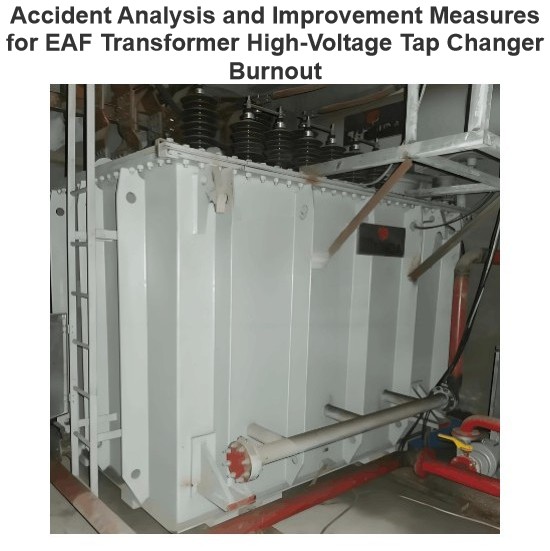
Accident Analysis and Improvement Measures for EAF Transformer High-Voltage Tap Changer Burnout
Currently, the company operates two electric arc furnace (EAF) transformers. The secondary voltage ranges from 121 V to 260 V, with a rated current of 504 A / 12,213 A. The high-voltage side has a total of eight tap positions, utilizing motor-driven off-circuit voltage regulation. The equipment is equipped with a reactor of corresponding capacity, connected in series to designated taps on the high-voltage side. These transformers have been in operation for over 20 years. Throughout this period,
08/07/2025
Consult
Tip
Consult
Tip
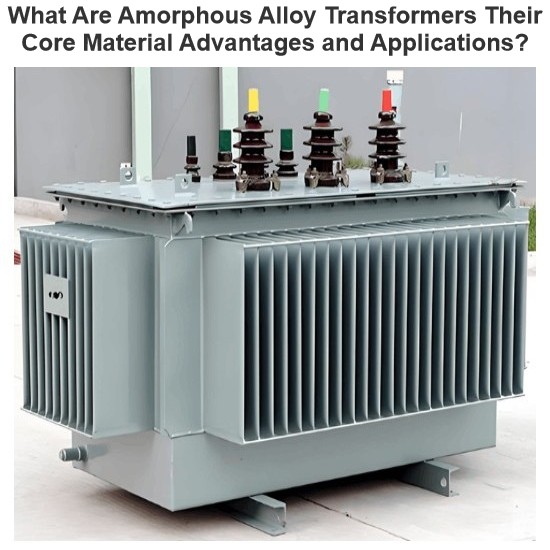
What Are Amorphous Alloy Transformers Their Core Material Advantages and Applications?
Amorphous alloy transformers, developed in the 1970s, represent a new generation of power transformers that utilize amorphous alloys as the core material instead of conventional silicon steel sheets. Compared to silicon steel-core transformers, they reduce no-load losses by approximately 70%–80% and no-load current by about 85%. These transformers are currently among the most energy-efficient distribution transformers available, making them ideal for applications in areas with low load
08/07/2025
Consult
Tip
Consult
Tip
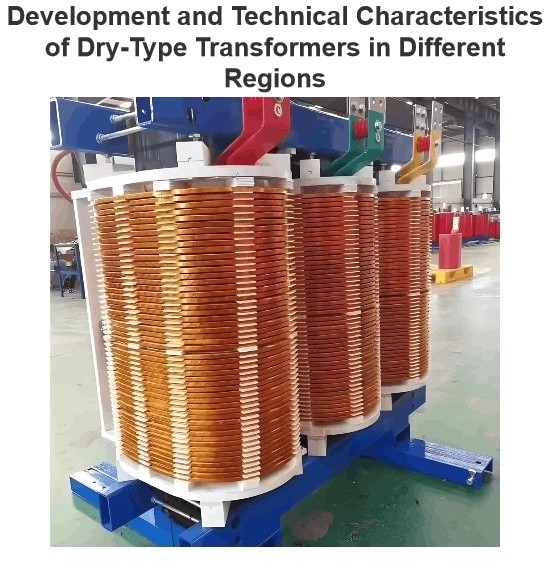
Development and Technical Characteristics of Dry-Type Transformers in Different Regions
Prior to the 1960s, dry-type transformers primarily employed Class B insulation in open-ventilated designs, with the product model designated as SG. At that time, foil windings were not yet available, so low-voltage coils were typically constructed using multi-strand conductors in layered or spiral configurations, while high-voltage coils adopted a disc-type design. The conductors used were either double glass-fiber-wrapped wires or single glass-fiber-wrapped wires with alkyd enamel coating.Most
08/06/2025
Consult
Tip
Consult
Tip
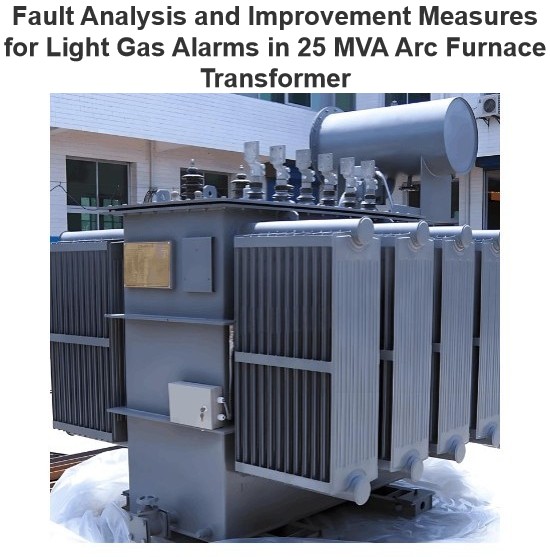
Fault Analysis and Improvement Measures for Light Gas Alarms in 25 MVA Arc Furnace Transformer
A 25 MVA electric arc furnace transformer at a certain company is an equipment imported from the former Soviet Union. It consists of three single-phase transformers, each rated at 8.333 MVA, with a connection group of D,d0. The primary voltage is 10 kV, and the secondary voltage ranges from 140 to 230.4 V. The tap-changing method is on-load tap changing with 21 steps (steps 11, 12, and 13 are combined as one step, totaling 23 positions). Each phase can be regulated independently, allowing separa
08/06/2025
Consult
Tip
Consult
Tip
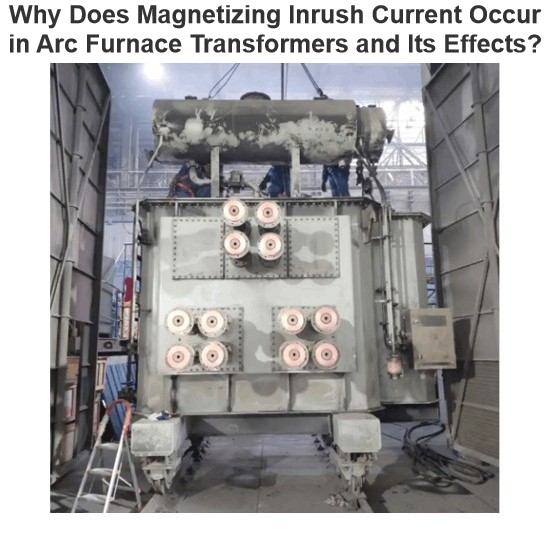
Why Does Magnetizing Inrush Current Occur in Arc Furnace Transformers and Its Effects?
Magnetizing inrush current in electric arc furnace transformers is a problem that troubles many electrical engineers. So, why does magnetizing inrush current occur in arc furnace transformers? First, let's understand what magnetizing inrush current is.Magnetizing inrush current refers to the transient current generated in the secondary winding of an arc furnace transformer due to core saturation, increased magnetic field strength, and other factors. This phenomenon is very common during the oper
08/06/2025
Consult
Tip
Consult
Tip
Send inquiry
+86
Click to upload file
Download
Get the IEE Business Application
Use the IEE-Business app to find equipment, obtain solutions, connect with experts, and participate in industry collaboration anytime, anywhere—fully supporting the development of your power projects and business.