
Dielectric Bias Testing of High-Voltage Circuit BreakersDielectric bias testing is a critical procedure used to evaluate the insulation performance of high-voltage circuit breakers (CBs) under conditions that simulate real-world voltage stresses. In this test, the circuit breaker is subjected to two separate voltages simultaneously: a power frequency (PF) voltage and either a switching (SW) impulse or a lightning impulse (LI). This combination of voltages mimics the actual voltage conditions tha
12/25/2024
Consult
Tip

Arc Voltage in Gas Circuit BreakersIn gas circuit breakers, the arc voltage is a critical parameter that influences the interruption process and the overall performance of the breaker. The arc voltage can range from a few hundred volts to several kilovolts, depending on various factors. Below is a detailed explanation of the key factors that affect the arc voltage:1.Arc Length Principle: The voltage drop across the arc is directly proportional to the length of the arc. As the arc length increase
12/24/2024
Consult
Tip

Calculating the fault current (short-circuit current) on the secondary side of a transformer supplying a transmission line is a complex process that involves multiple parameters of the power system. Below are the steps and relevant formulas to help you understand how to perform this calculation. We will assume the system is a three-phase AC system, and the fault occurs on the transformer's secondary side.1. Determine System ParametersTransformer Parameters: Rated capacity of the transformer rate
12/23/2024
Consult
Tip

Site Condition Severity Assessment and Insulator/Bushing Upgrade StrategyStep-by-Step Approach: Measure or Estimate Site Condition Severity: Environmental Factors: Assess the severity of environmental conditions such as pollution, humidity, temperature fluctuations, and salt spray (for coastal areas). Operational Data: Collect data on historical insulator performance, including flashover incidents, arcing, and contamination levels. Field Inspections: Conduct visual inspections to identify si
12/23/2024
Consult
Tip

TEE Detection Methods During CB Switching OperationsDuring circuit breaker (CB) switching operations, transient earth voltages (TEEs) are generated by electric discharges within each interrupter. These TEEs, caused by disruptive discharges such as pre-strikes, re-ignitions, and restrikes, exhibit high amplitude and a broadband frequency range. To detect and analyze these TEEs, three primary methods have been developed: TEE Detection with UHF Antennas Description: This method employs four passive
12/21/2024
Consult
Tip

Vibration Signal Analysis for Circuit Breaker (CB) Health MonitoringIntroductionDuring the opening and closing processes of a circuit breaker (CB), a vibration signal is generated. This signal contains valuable information about the health status of the equipment, including the moment of arc contact opening, which can indicate wear and tear, mechanical issues, or other potential problems. One critical aspect of CB health monitoring is the measurement of switchgear contacts ablation, which refers
12/21/2024
Consult
Tip
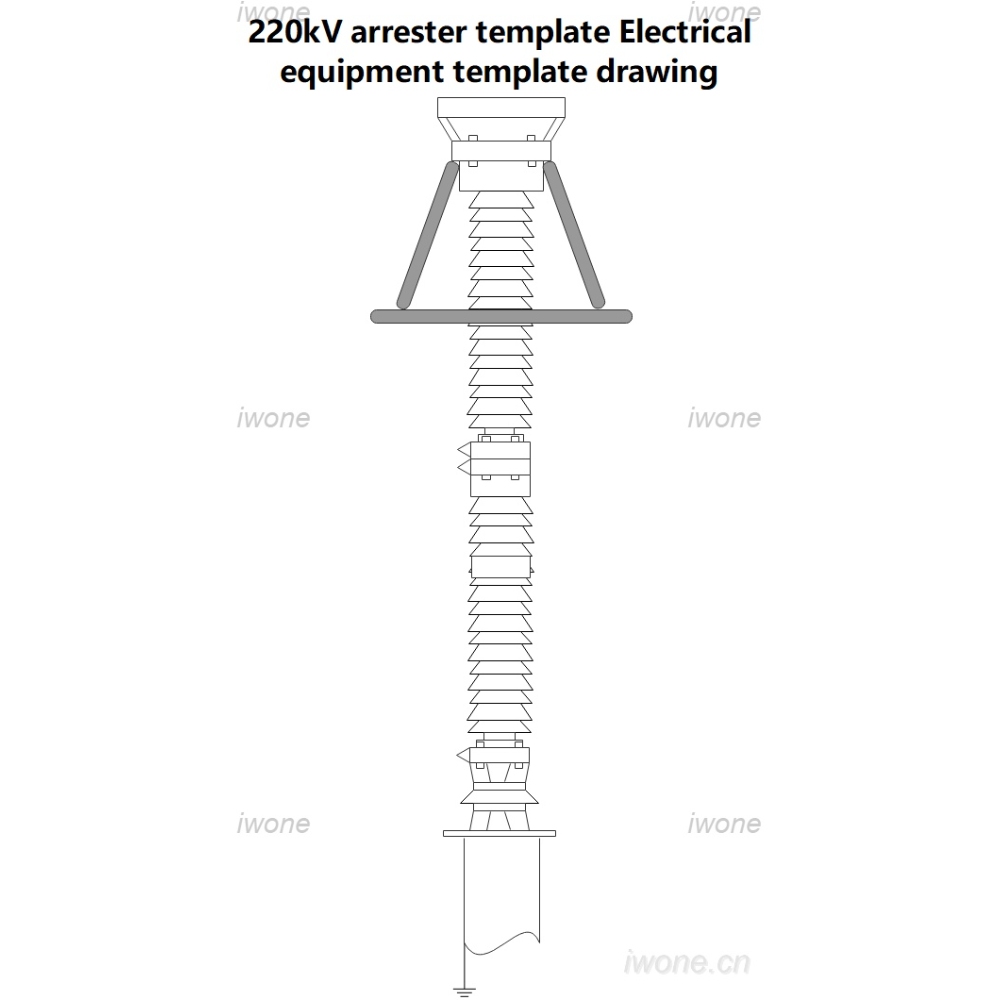
220kV arrester template Electrical equipment template drawing
12/19/2024
Consult
Tip

Enhanced Interrupting Capabilities and Mechanical Reliability in Gas-Insulated Circuit Breakers (GCBs)Mitsubishi Electric has developed a highly advanced torsion bar spring operating mechanism for Gas-Insulated Circuit Breakers (GCBs), which has enabled the development of higher interrupting capabilities, reaching up to 550/420 kV. This innovative mechanism offers several key benefits, including increased mechanical reliability and reduced maintenance requirements.Key Features of the Torsion Bar
12/19/2024
Consult
Tip

Similarities Between DC Molded Case Circuit Breakers (MCCB) and DC Miniature Circuit Breakers (MCB) Basic Function: Both provide overload and short-circuit protection, ensuring that the circuit is automatically interrupted when the current exceeds a set value to prevent equipment damage or safety hazards such as fires. Operating Principle: They both use thermal-magnetic or electronic trip mechanisms to detect abnormal currents and trigger disconnection based on preset conditions. Application Sco
12/18/2024
Consult
Tip






