• Product
  • Suppliers
  • Manufacturers
  • Solutions
  • Free tools
  • Knowledges
  • Experts
  • Communities
Search


Free Expert Guides on Power Systems, Circuit Design & Electrical Troubleshooting

Access free engineering resources from IEE Business—covering power design, circuit layout, equipment selection, and troubleshooting. Expert-developed guides help engineers, procurement, and project teams make better decisions. Stay ahead on smart grids, renewables, efficiency, and AI tools. Improve reliability, reduce downtime, and enhance outcomes with real-world solutions. Explore our knowledge hub today.
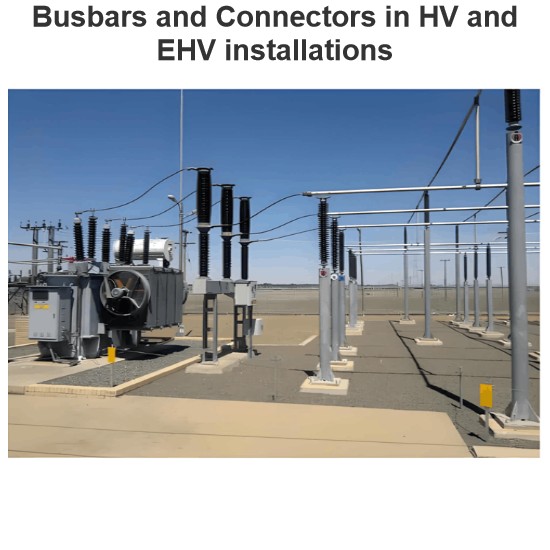
Busbars and Connectors in HV and EHV installations
Busbars and Connectors in Indoor and Outdoor InstallationsWhat is an Electric Busbar?An electric busbar is defined as a single conductor or a group of conductors that serve the purpose of collecting electrical power from incoming feeders and distributing it to outgoing feeders. In essence, it acts as a crucial junction where the currents from incoming and outgoing feeders converge, effectively aggregating electrical power at a single point within an electrical system. This function makes busbars
05/06/2025
Consult
Tip
Consult
Tip
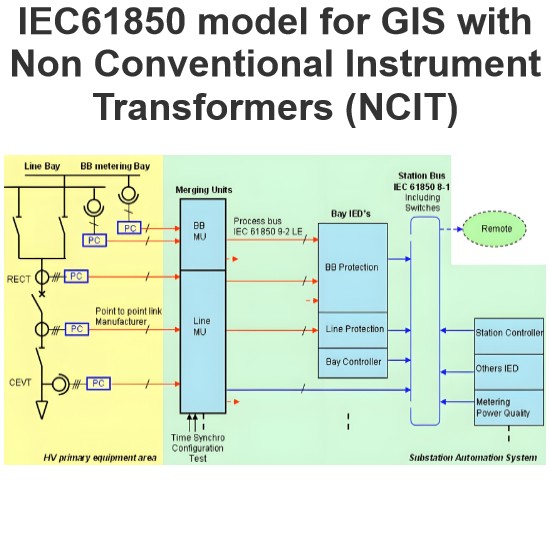
IEC61850 model for GIS with Non Conventional Instrument Transformers (NCIT)
IEC 61850 Standards and NCIT - Related Communication in GISThe IEC 61850 8 - 1 standard is specifically applicable to station bus communication, providing a framework for data exchange and interoperability within substation automation systems. On the other hand, the IEC 61850 9 - 2 LE standard is directly relevant to the communication of Non - Contact Inductive Transducer (NCIT) sensors.Ethernet optical communication drivers play a crucial role in this setup. Their significance stems from the ut
05/06/2025
Consult
Tip
Consult
Tip
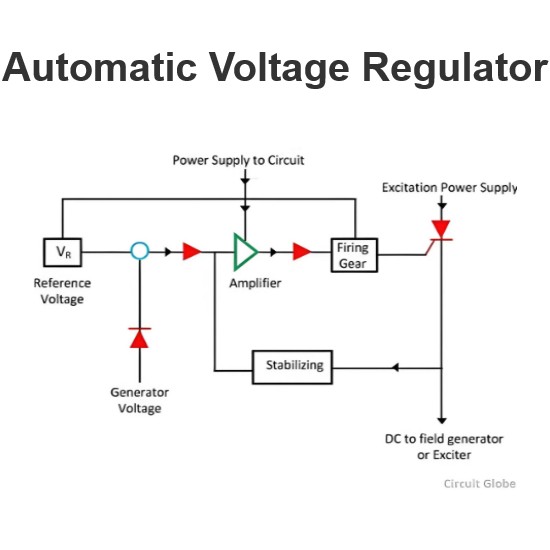
Automatic Voltage Regulator
Automatic Voltage RegulatorThe automatic voltage regulator (AVR) is an essential device designed to regulate voltage levels. It takes fluctuating voltages and converts them into a stable, constant voltage. Voltage fluctuations primarily occur due to variations in the load on the supply system. Such voltage variations can be detrimental to the equipment within the power system, potentially causing malfunctions or even permanent damage.To control these voltage variations, voltage - control equipme
04/16/2025
Consult
Tip
Consult
Tip
In an ungrounded system, what is the return path for the capacitive coupling between the high voltage line and the earth to maintain the flow?
In an ungrounded (or isolated grounding) power system, there indeed exists capacitive coupling between high-voltage lines and the earth, forming a capacitive current path. This phenomenon occurs because the electric field between the high-voltage conductors and their surrounding environment, including the ground, causes uneven charge distribution, resulting in what is known as "earth capacitance."Return Path Through Capacitive Coupling Earth Capacitance: Each high-voltage line has a certain amou
02/05/2025
Consult
Tip
Consult
Tip
What are smart switchgears?
What is a smart switchgear?A smart switchgear is a kind of electrical equipment that integrates advanced sensor technology, communication technology, automatic control technology, and intelligent analysis technology, etc., to carry out intelligent upgrades on traditional switchgears. It is mainly used for the distribution, control, and protection of electrical energy in the power system. The following is a detailed introduction from aspects such as its functional characteristics, structural comp
01/24/2025
Consult
Tip
Consult
Tip
The difference between TT and TN grounding
In electrical power systems, earthing (grounding) is a critical measure to ensure the safety of electrical equipment and personnel. Depending on how the neutral point of the power source and the exposed conductive parts (such as metal enclosures) of electrical equipment are connected to the ground, power systems can be classified into various types. The two most common types are TN systems and TT systems. The primary differences between these systems lie in how the neutral point of the power sou
01/08/2025
Consult
Tip
Consult
Tip
What is a voltage regulator?
A voltage regulator is an electrical device used to control and stabilize the output voltage, ensuring that it remains within a specified range even when the input voltage or load changes. Voltage regulators are widely used in power systems, industrial equipment, household appliances, and other applications to protect sensitive devices from voltage fluctuations and ensure stable system operation.1. Basic Functions of a Voltage Regulator Voltage Regulation: The primary function of a voltage regul
12/30/2024
Consult
Tip
Consult
Tip
How do you maximize the lifespan of your electric panel?
How to Maximize the Lifespan of Electrical PanelsExtending the lifespan of electrical panels is crucial for ensuring the stability and safety of power systems. Below are some effective strategies and maintenance practices that can help maximize the lifespan of electrical panels:1. Regular Maintenance and Inspections Preventive Maintenance: Regular preventive maintenance is key to extending the life of electrical panels. It is advisable to develop a detailed maintenance schedule based on the manu
12/04/2024
Consult
Tip
Consult
Tip
Why are synchronous condensers crucial for power grid stability?
A synchronous condenser (also known as a synchronous compensator or rotating VAR compensator) is a special type of synchronous motor that does not drive any mechanical load. Instead, it is specifically used to improve the voltage and reactive power characteristics of a power system. Synchronous condensers are crucial for grid stability for several reasons:1. Provision of Reactive Power Support Role of Reactive Power: In an AC power system, reactive power (Reactive Power, Q) is essential for main
12/03/2024
Consult
Tip
Consult
Tip
What are some examples of linear and non-linear systems?
Examples of Linear and Nonlinear SystemsLinear and nonlinear systems are two important categories in control systems theory. Linear systems exhibit behavior that follows the superposition principle, while nonlinear systems do not. Below are some typical examples of linear and nonlinear systems:Linear SystemsLinear systems are characterized by a linear relationship between input and output, meaning they satisfy the principles of superposition and homogeneity. Common examples of linear systems inc
11/28/2024
Consult
Tip
Consult
Tip
Send inquiry
+86
Click to upload file
Download
Get the IEE Business Application
Use the IEE-Business app to find equipment, obtain solutions, connect with experts, and participate in industry collaboration anytime, anywhere—fully supporting the development of your power projects and business.