• Product
  • Suppliers
  • Manufacturers
  • Solutions
  • Free tools
  • Knowledges
  • Experts
  • Communities
Search


Free Expert Guides on Power Systems, Circuit Design & Electrical Troubleshooting

Access free engineering resources from IEE Business—covering power design, circuit layout, equipment selection, and troubleshooting. Expert-developed guides help engineers, procurement, and project teams make better decisions. Stay ahead on smart grids, renewables, efficiency, and AI tools. Improve reliability, reduce downtime, and enhance outcomes with real-world solutions. Explore our knowledge hub today.
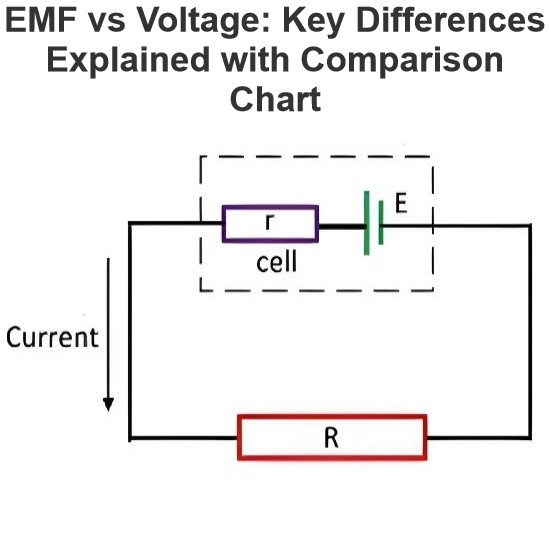
EMF vs Voltage: Key Differences Explained with Comparison Chart
One of the key differences between electromotive force (EMF) and voltage is that EMF refers to the energy supplied to charges, while voltage represents the energy required to move a unit charge from one point to another. Other distinctions between the two are detailed in the comparison chart below.Comparison ChartDefinition of VoltageVoltage is defined as the energy required to move a unit charge from one point to another. It is measured in volts (V) and denoted by the symbolV. Voltage is induce
08/01/2025
Consult
Tip
Consult
Tip
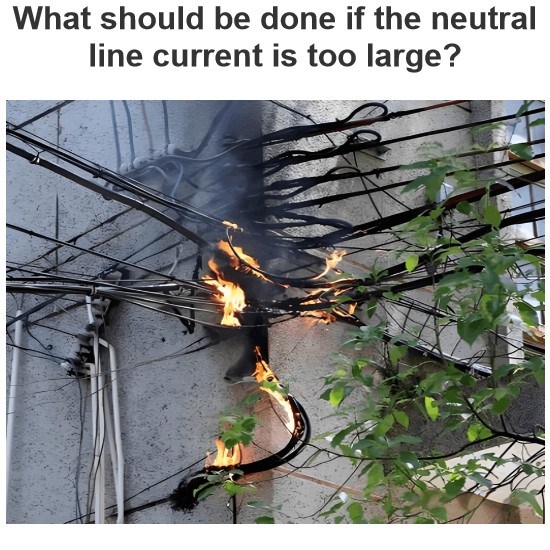
What should be done if the neutral line current is too large?
As we all know, if an electrical line exceeds its rated load, it will overheat severely, and may even cause a fire. For safety reasons, overcurrent protection devices are therefore installed on lines. Whenever the current in the line exceeds the rated value, the overcurrent protection device will automatically cut off the line to prevent fire. The "excessive neutral line current" mentioned here refers to the phenomenon where the neutral line current is excessively high (more than 1.5 times the p
08/01/2025
Consult
Tip
Consult
Tip
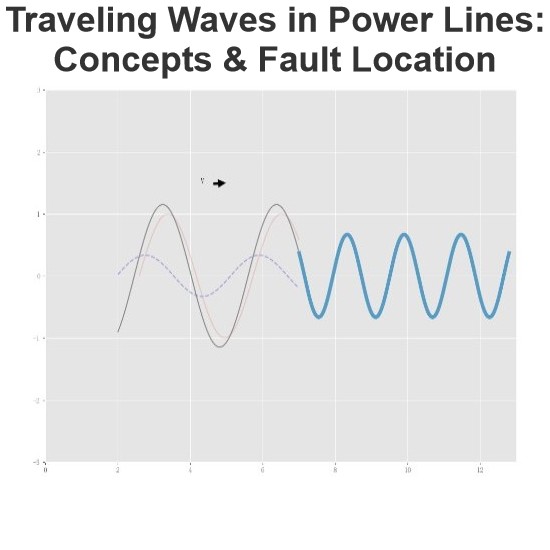
Traveling Waves in Power Lines: Concepts & Fault Location
Traveling Waves on LinesA traveling wave on a line refers to a voltage or current wave propagating along the line; it is also defined as a voltage or current signal traveling along a conductor. Steady-state traveling wave: A traveling wave propagating along the line during the normal operation of a system, generated by the system's power supply. Transient traveling wave: A suddenly occurring traveling wave during system operation, caused by ground faults, short-circuit faults, wire breakages, sw
07/28/2025
Consult
Tip
Consult
Tip
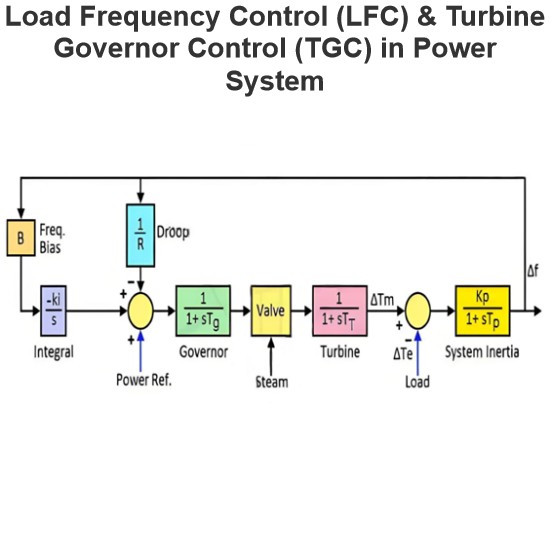
Load Frequency Control (LFC) & Turbine Governor Control (TGC) in Power System
Brief Introduction to Thermal Generating UnitsElectricity generation relies on both renewable and non - renewable energy resources. Thermal generating units represent a conventional approach to power production. In these units, fuels such as coal, nuclear energy, natural gas, biofuel, and biogas are combusted within a boiler.The boiler of a generating unit is an extremely complex system. In its simplest conception, it can be visualized as a chamber whose walls are lined with pipes, through which
06/06/2025
Consult
Tip
Consult
Tip
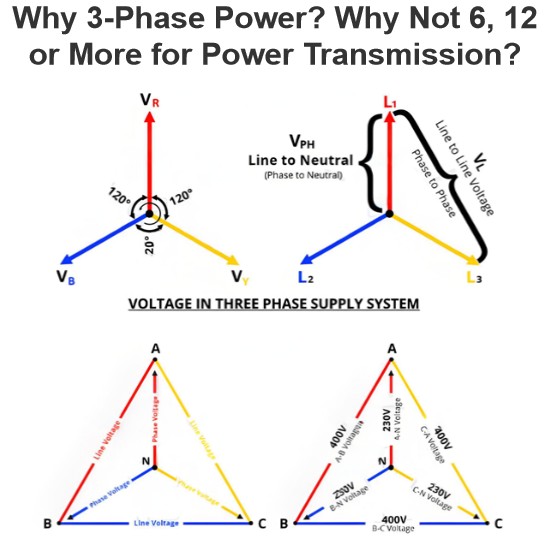
Why 3-Phase Power? Why Not 6, 12 or More for Power Transmission?
It is well-known that single-phase and three-phase systems are the most prevalent configurations for power transmission, distribution, and end-use applications. While both serve as fundamental power supply frameworks, three-phase systems offer distinct advantages over their single-phase counterparts.Notably, multi-phase systems (such as 6-phase, 12-phase, etc.) find specific applications in power electronics—particularly in rectifier circuits and variable frequency drives (VFDs)&md
06/05/2025
Consult
Tip
Consult
Tip
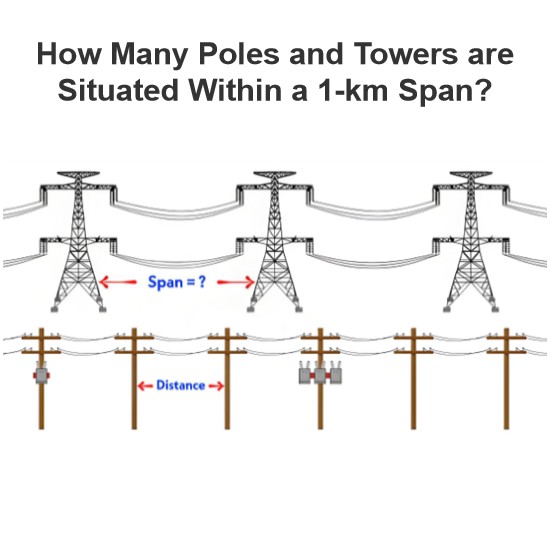
How Many Poles and Towers are Situated Within a 1-km Span?
The number of distribution poles and transmission towers within a 1-kilometer stretch of overhead lines varies significantly based on multiple factors, including voltage level, power line type, supporting structure, geographical location, local regulations, and specific grid requirements.In urban areas, distribution utility poles are typically positioned at closer intervals, while in rural regions, they are spaced farther apart. Additionally, the use of taller structures for higher-voltage trans
06/05/2025
Consult
Tip
Consult
Tip
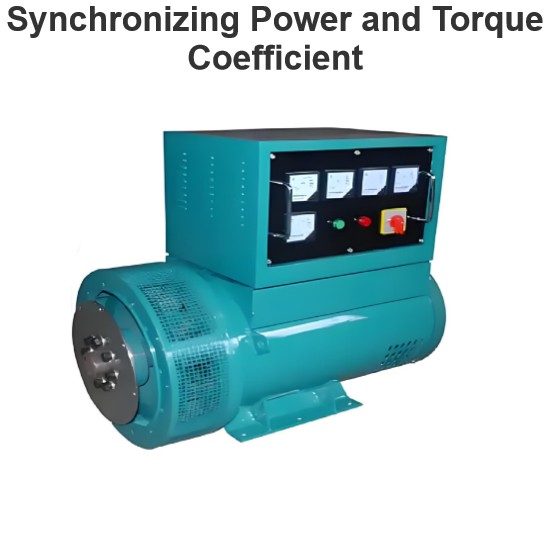
Synchronizing Power and Torque Coefficient
Definition of Synchronizing PowerSynchronizing power, denoted as Psyn, is defined as the variation in synchronous powerP with respect to changes in the load angle δ. Also referred to as thestiffness of coupling,stability factor, orrigidity factor, it quantifies a synchronous machine’s (generator or motor) inherent tendency to maintain synchronism when connected to infinite busbars.Principle of Synchronism MaintenanceConsider a synchronous generator transmitting a steady power
06/04/2025
Consult
Tip
Consult
Tip
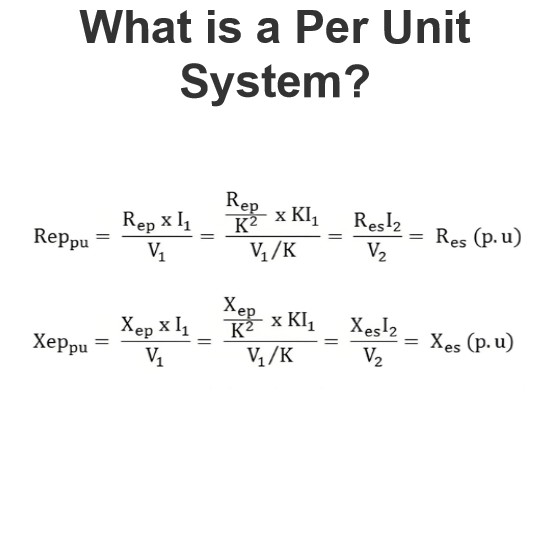
What is a Per Unit System?
Per-Unit System in Electrical Machine AnalysisFor the analysis of electrical machines or their systems, diverse parameter values are often required. The per-unit (pu) system provides standardized representations for voltage, current, power, impedance, and admittance, streamlining calculations by normalizing all values to a common base. This system is particularly advantageous in circuits with fluctuating voltages, where it simplifies cross-referencing and analysis.DefinitionThe per-unit value of
06/03/2025
Consult
Tip
Consult
Tip
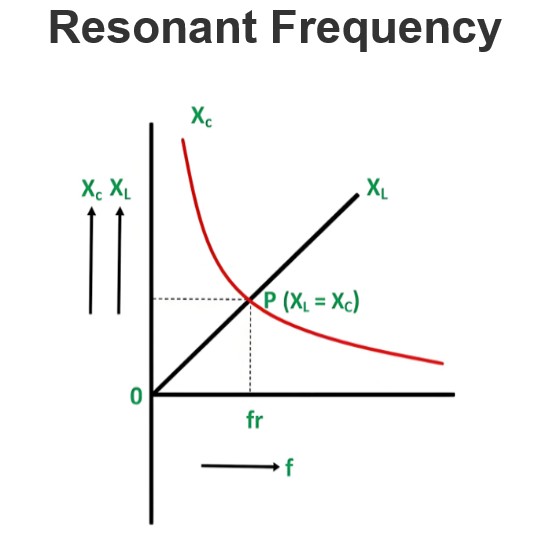
Resonant Frequency
In a series circuit, the resonant frequency condition occurs when the inductive reactance equals the capacitive reactance. Changing the supply frequency alters the values of XL = 2πfL and XC = 1/2πfC.As the frequency increases, XL rises whileXC falls. Conversely, a decrease in frequency causesXL to drop andXCto rise.To achieve series resonance, the frequency is tuned to fr(pointP in the curve below), whereXL = XC.At series resonance, when XL = XCWhere frdenotes the resonant frequen
06/02/2025
Consult
Tip
Consult
Tip
Voltage Source and Current Source
Definition of Electrical SourceA source is a device that converts mechanical, chemical, thermal, or other forms of energy into electrical energy. As an active network element, it serves the purpose of generating electrical energy.In electrical networks, the primary types of sources are voltage sources and current sources: A voltage source is characterized by an electromotive force (emf) as its forcing function. A current source is defined by a current forcing function.Current and voltage sources
06/02/2025
Consult
Tip
Consult
Tip
Send inquiry
+86
Click to upload file
Download
Get the IEE Business Application
Use the IEE-Business app to find equipment, obtain solutions, connect with experts, and participate in industry collaboration anytime, anywhere—fully supporting the development of your power projects and business.