• Product
  • Suppliers
  • Manufacturers
  • Solutions
  • Free tools
  • Knowledges
  • Experts
  • Communities
Search


Free Expert Guides on Power Systems, Circuit Design & Electrical Troubleshooting

Access free engineering resources from IEE Business—covering power design, circuit layout, equipment selection, and troubleshooting. Expert-developed guides help engineers, procurement, and project teams make better decisions. Stay ahead on smart grids, renewables, efficiency, and AI tools. Improve reliability, reduce downtime, and enhance outcomes with real-world solutions. Explore our knowledge hub today.
What Are the Classifications and Types of FACTS Controllers and Devices?
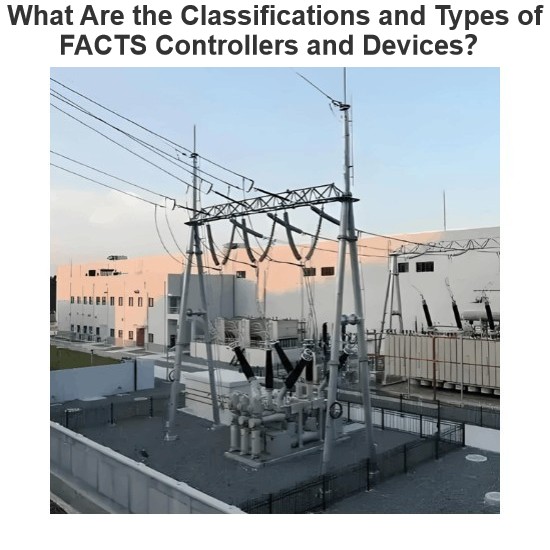
According to the type of connection FACTS Controller with the power system, it is classified as; Series Connected Controller Shunt Connected Controller Combined Series-Series Controller Combined Shunt-Series ControllerSeries-Connected ControllersSeries controllers introduce a voltage in series with the line voltage, typically using capacitive or inductive impedance devices. Their primary function is to supply or absorb variable reactive power as needed.When a transmission line is heavily loaded,
07/19/2025
Consult
Tip
Consult
Tip
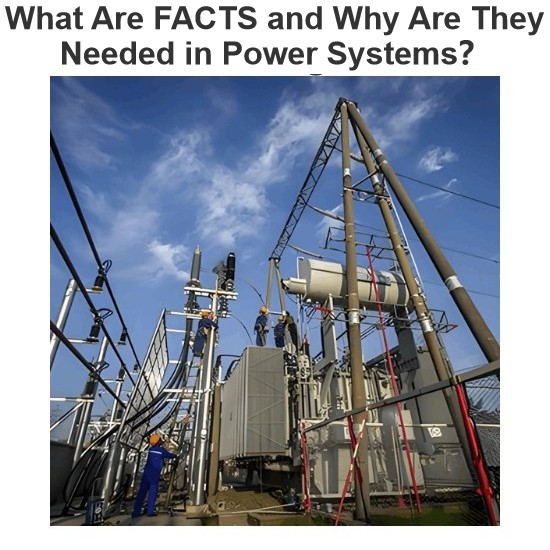
What Are FACTS and Why Are They Needed in Power Systems?
FACTS (Flexible Alternating Current Transmission System) refers to a power electronics-based system that uses static devices to enhance the power transfer capability and controllability of AC transmission networks.These power electronic devices are integrated into conventional AC grids to boost key performance metrics, including: Power transfer capacity of transmission lines Voltage stability and transient stability Voltage regulation precision System reliability Thermal limits of transmission i
07/19/2025
Consult
Tip
Consult
Tip
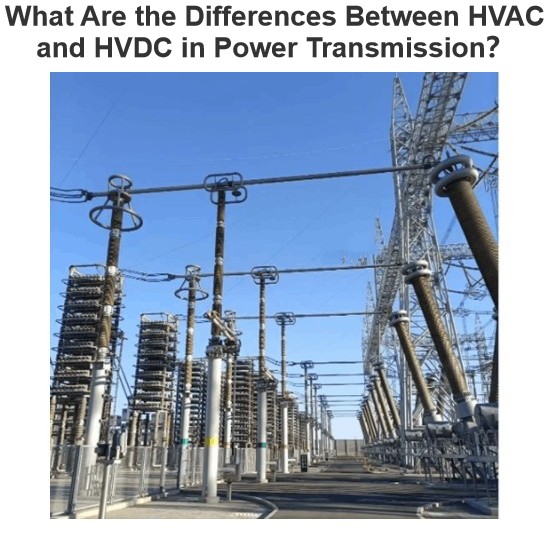
What Are the Differences Between HVAC and HVDC in Power Transmission?
Difference Between HVAC and HVDCElectricity generated in power plants is transmitted over long distances to electrical substations, which then distribute it to consumers. The voltage used for long-distance power transmission is extremely high, and we will explore the reasons for this high voltage later. Additionally, the transmitted power can be in either alternating current (AC) or direct current (DC) form. Therefore, power can be transmitted using either HVAC (High Voltage Alternating Current)
07/19/2025
Consult
Tip
Consult
Tip
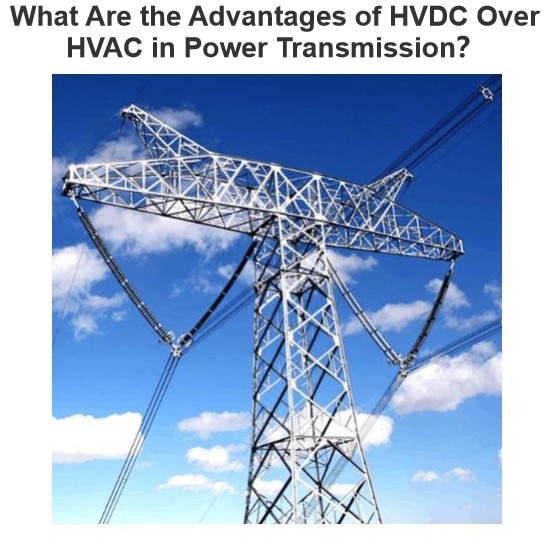
What Are the Advantages of HVDC Over HVAC in Power Transmission?
What are the Advantages of HVDC over HVAC?Electricity travels long distances before reaching consumers. Power plants, often remote, supply electricity through hundreds of miles and multiple substations. High-voltage transmission reduces line losses, with both AC and DC used. Though AC is familiar via utility poles and home outlets, HVDC offers unique advantages in power transmission.The goal of power transmission is to minimize losses and costs. While both face influencing factors, HVDC has more
07/19/2025
Consult
Tip
Consult
Tip
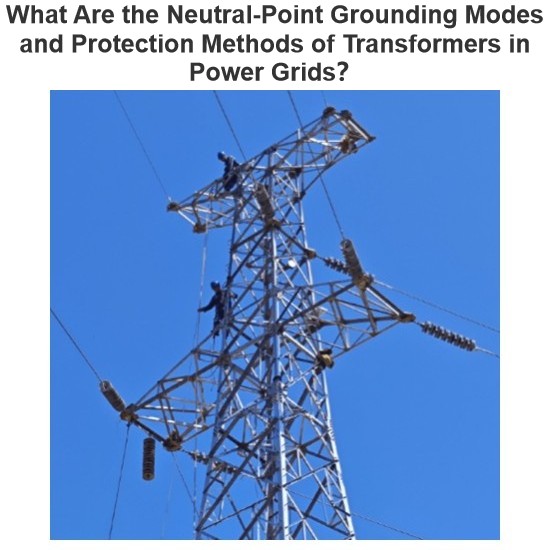
What Are the Neutral-Point Grounding Modes and Protection Methods of Transformers in Power Grids?
Neutral - Point Grounding Modes and Protection of Transformers in Power GridsFor systems ranging from 110 kV to 500 kV, an effective grounding method shall be adopted. Specifically, under all operating conditions, the ratio of zero - sequence reactance to positive - sequence reactance X0/X1 of the system should be a positive value and not exceed 3. Meanwhile, the ratio of zero - sequence resistance to positive - sequence reactance R0/X1should also be a positive value and not exceed 1.In 330 kV a
07/19/2025
Consult
Tip
Consult
Tip
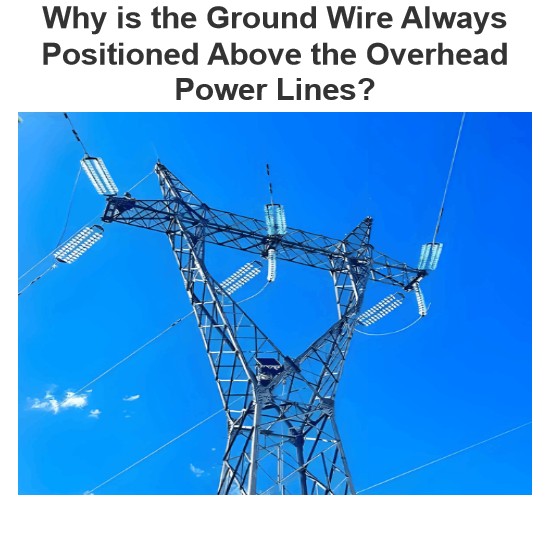
Why is the Ground Wire Always Positioned Above the Overhead Power Lines?
Ground Wire in Overhead Transmission LinesThe ground wire (also called earth wire or OPGW) installed above phase lines in overhead transmission lines acts as a key protective and safety component. It provides lightning protection, ground fault defense, and helps prevent electrical system disruptions.In overhead transmission lines, positioning the ground wire above phase lines serves specific safety and performance purposes. Referred to as a "shield wire" or "static wire," this configuration has
06/04/2025
Consult
Tip
Consult
Tip
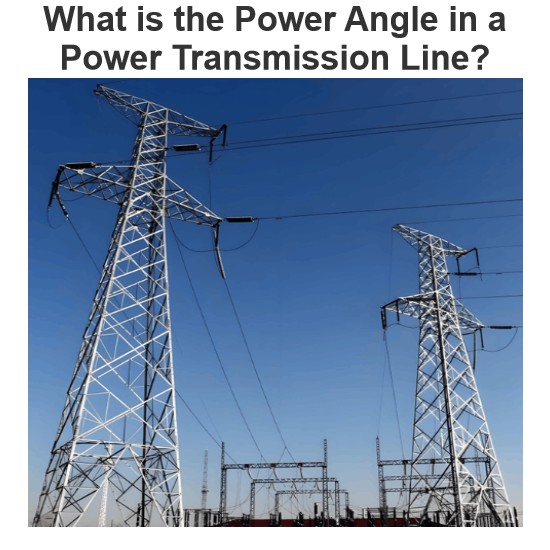
What is the Power Angle in a Power Transmission Line?
The power angle, denoted by δ, is the phase angle difference between two voltage levels in a power transmission line. Specifically, it represents the angular discrepancy between the sending-end voltage phasor and the receiving-end voltage (or between voltages at two bus points). In simpler terms, it quantifies the phase shift between voltage and current waveforms in the transmission line.Also referred to as the torque angle or load angle, this parameter is critical for two key reasons:
06/04/2025
Consult
Tip
Consult
Tip
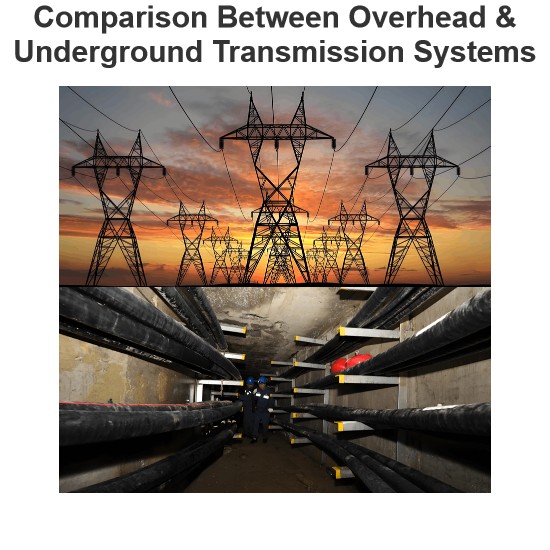
Comparison Between Overhead & Underground Transmission Systems
Key Differences and Comparison Between Underground and Overhead Power Transmission & DistributionPublic SafetyIn terms of public safety, underground systems outperform overhead transmission systems. With all transmission and distribution components buried, underground setups minimize risks from obstacles and external interference. Additionally, they are less susceptible to environmental factors like wind, storms, and heavy rain, making them inherently more secure.Initial CostUnderground syst
05/30/2025
Consult
Tip
Consult
Tip
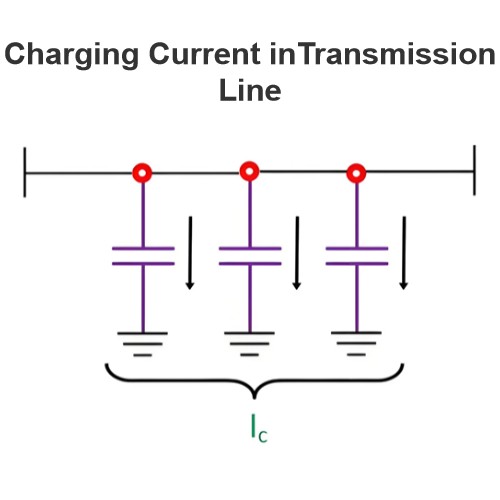
Charging Current in Transmission Line
Charging Current in Transmission LinesIn a transmission line, air serves as the dielectric medium between conductors. When voltage is applied to the sending end, current begins to flow between conductors due to the imperfect insulating properties of the dielectric. This current is known as the charging current of the transmission line.In other words, the current associated with the line capacitance is defined as the charging current. The magnitude of charging current depends on the line voltage,
05/23/2025
Consult
Tip
Consult
Tip
Why are Coaxial Cables Highly Insulated?
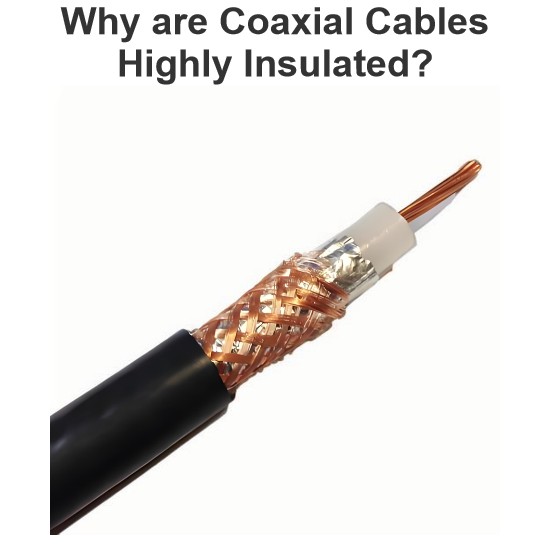
What is a Coaxial Cable?A coaxial cable is a type of electrical cable designed to transmit high-frequency electrical signals with minimal interference. It features a central conductor(typically copper or copper-plated wire) surrounded by a cylindricalinsulating layer, which is then enclosed by aconductive shield. This shield usually consists of one to four layers of woven/braided aluminum or copper wire, often combined with aluminum foil for enhanced performance.Key Components and Construction C
05/15/2025
Consult
Tip
Consult
Tip
Send inquiry
+86
Click to upload file
Download
Get the IEE Business Application
Use the IEE-Business app to find equipment, obtain solutions, connect with experts, and participate in industry collaboration anytime, anywhere—fully supporting the development of your power projects and business.