• Product
  • Suppliers
  • Manufacturers
  • Solutions
  • Free tools
  • Knowledges
  • Experts
  • Communities
Search


Free Expert Guides on Power Systems, Circuit Design & Electrical Troubleshooting

Access free engineering resources from IEE Business—covering power design, circuit layout, equipment selection, and troubleshooting. Expert-developed guides help engineers, procurement, and project teams make better decisions. Stay ahead on smart grids, renewables, efficiency, and AI tools. Improve reliability, reduce downtime, and enhance outcomes with real-world solutions. Explore our knowledge hub today.
Commissioning Test Procedures for Oil-Immersed Power Transformers
Transformer Testing Procedures and Requirements1. Non-Porcelain Bushing Tests1.1 Insulation ResistanceSuspend the bushing vertically using a crane or support frame. Measure the insulation resistance between the terminal and the tap/french using a 2500V megohmmeter. The measured values should not significantly deviate from factory values under similar environmental conditions. For capacitive-type bushings rated 66kV and above with tap bushings, measure the insulation resistance between the "small
12/17/2025
Consult
Tip
Consult
Tip
Quality Standards for Core Maintenance of Power Transformers
Transformer Core Inspection and Assembly Requirements The iron core should be flat with intact insulation coating, tightly stacked laminations, and no curling or waviness at the edges of silicon steel sheets. All core surfaces must be free of oil, dirt, and impurities. There should be no short circuits or bridging between laminations, and joint gaps must meet specifications. Good insulation must be maintained between the core and upper/lower clamping plates, square iron pieces, pressure plates,
12/17/2025
Consult
Tip
Consult
Tip
Power Transformers: Short Circuit Risks, Causes, and Improvement Measures
Power Transformers: Short Circuit Risks, Causes, and Improvement MeasuresPower transformers are fundamental components in power systems that provide energy transmission and are crucial induction devices ensuring safe power operation. Their structure consists of primary coils, secondary coils, and an iron core, utilizing the principle of electromagnetic induction to alter AC voltage. Through long-term technological improvements, the reliability and stability of power supply have continuously enha
12/17/2025
Consult
Tip
Consult
Tip
8 Key Measures to Reduce Partial Discharge in Power Transformers
Growing Requirements for Power Transformer Cooling Systems and the Function of CoolersWith the rapid development of power grids and the increase in transmission voltage, power grids and electricity users are demanding increasingly higher insulation reliability for large power transformers. Since partial discharge testing is non-destructive to insulation yet highly sensitive, effectively detecting inherent defects in transformer insulation or safety-threatening defects generated during transporta
12/17/2025
Consult
Tip
Consult
Tip
General Requirements and Functions of Power Transformer Cooling Systems
General Requirements for Power Transformer Cooling Systems All cooling devices shall be installed in accordance with the manufacturer's specifications; The cooling system with forced oil circulation must have two independent power supplies with automatic switching capability. When the working power supply fails, the standby power supply shall be automatically activated while emitting audible and visual signals; For transformers with forced oil circulation, when a faulty cooler is disconnected, a
12/17/2025
Consult
Tip
Consult
Tip
Carbon Footprint vs TCO Analysis for Power Transformer Design
1. OverviewDue to global warming, reducing greenhouse gas emissions is a critical issue. A significant portion of losses in power transmission systems comes from power transformers. To reduce greenhouse gas emissions in power systems, more efficient transformers must be installed. However, more efficient transformers often require more manufacturing materials. To determine the optimal loss ratio and manufacturing price of transformers, the Total Cost of Ownership (TCO) method is the industry sta
12/17/2025
Consult
Tip
Consult
Tip
Functions and Selection of Grounding Transformers in Photovoltaic Power Stations
1.Neutral Point Establishment and System StabilityIn photovoltaic power stations, grounding transformers effectively establish a system neutral point. According to relevant power regulations, this neutral point ensures the system maintains certain stability during asymmetric faults, functioning like a "stabilizer" for the entire power system.2.Overvoltage Limitation CapabilityFor photovoltaic power stations, grounding transformers can effectively limit overvoltages. Generally, they can control o
12/17/2025
Consult
Tip
Consult
Tip
Transformer Protection Settings: Zero-Sequence & Overvoltage Guide
1. Zero-Sequence Overcurrent ProtectionThe operating current for zero-sequence overcurrent protection of grounding transformers is typically determined based on the transformer's rated current and the maximum allowable zero-sequence current during system ground faults. The general setting range is approximately 0.1 to 0.3 times the rated current, with operating time usually set between 0.5 to 1 second to quickly clear ground faults.2.Overvoltage ProtectionOvervoltage protection is a critical com
12/17/2025
Consult
Tip
Consult
Tip
Electrical Protection: Grounding Transformers and Bus Charging
1. High-Resistance Grounding SystemHigh-resistance grounding can limit ground fault current and appropriately reduce ground overvoltage. However, there is no need to connect a large high-value resistor directly between the generator neutral point and ground. Instead, a small resistor can be used together with a grounding transformer. The primary winding of the grounding transformer is connected between the neutral point and ground, while the secondary winding is connected to a small resistor. Ac
12/17/2025
Consult
Tip
Consult
Tip
Analysis and Remedial Measures for Insulation Failures in Power Transformers
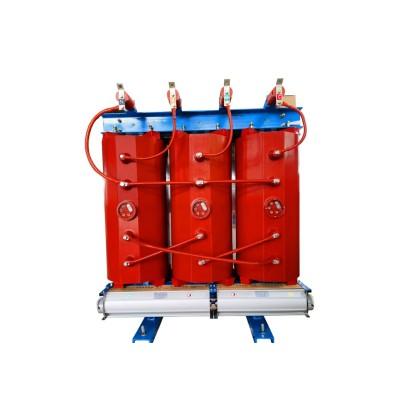
The Most Widely Used Power Transformers: Oil-Immersed and Dry-Type Resin TransformersThe two most widely used power transformers today are oil-immersed transformers and dry-type resin transformers. The insulation system of a power transformer, composed of various insulating materials, is fundamental to its proper operation. A transformer's service life is primarily determined by the lifespan of its insulating materials (oil-paper or resin).In practice, most transformer failures result from damag
12/16/2025
Consult
Tip
Consult
Tip
Send inquiry
+86
Click to upload file
Download
Get the IEE Business Application
Use the IEE-Business app to find equipment, obtain solutions, connect with experts, and participate in industry collaboration anytime, anywhere—fully supporting the development of your power projects and business.