• Product
  • Suppliers
  • Manufacturers
  • Solutions
  • Free tools
  • Knowledges
  • Experts
  • Communities
Search


Free Expert Guides on Power Systems, Circuit Design & Electrical Troubleshooting

Access free engineering resources from IEE Business—covering power design, circuit layout, equipment selection, and troubleshooting. Expert-developed guides help engineers, procurement, and project teams make better decisions. Stay ahead on smart grids, renewables, efficiency, and AI tools. Improve reliability, reduce downtime, and enhance outcomes with real-world solutions. Explore our knowledge hub today.
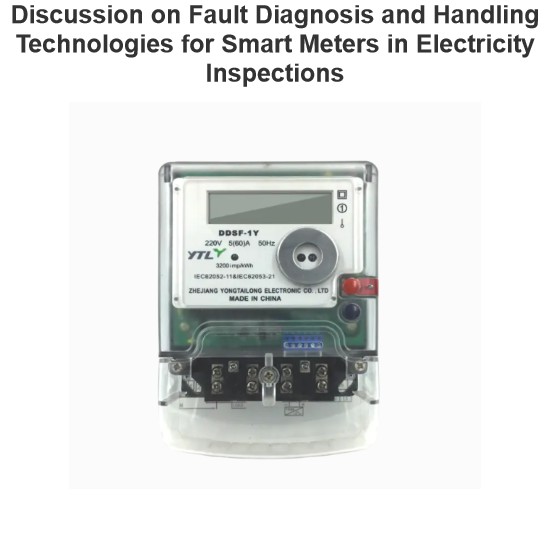
Discussion on Fault Diagnosis and Handling Technologies for Smart Meters in Electricity Inspections
1 Analysis of Smart Meter Faults and Their Impact on the Power Grid1.1 Introduction to Smart Meter Functions and Their Critical Role in Modern Power GridsSmart meters exchange data in real time with power companies through two-way communication, enabling functions such as remote meter reading and dynamic tariff adjustment. This capability allows users to adjust their consumption based on real-time pricing, achieving energy savings and cost reduction. Meanwhile, smart meters support grid automati
09/01/2025
Consult
Tip
Consult
Tip
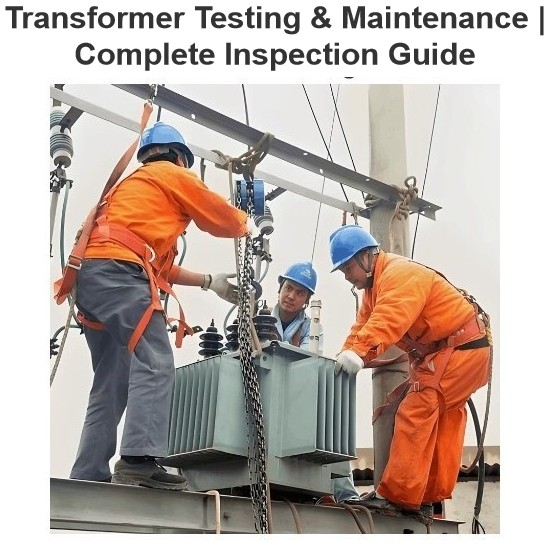
Transformer Testing & Maintenance | Complete Inspection Guide
Transformer testing, inspection, and maintenance are essential tasks to ensure normal operation and extend the service life of transformers. Below are some recommended steps: Visual Inspection: Regularly inspect the transformer's exterior, including the enclosure, cooling system, and oil tank. Ensure the enclosure is intact, free from corrosion, damage, or leakage. Insulation Resistance Testing: Use an insulation resistance tester to check the transformer's insulation system. Verify that the ins
08/29/2025
Consult
Tip
Consult
Tip
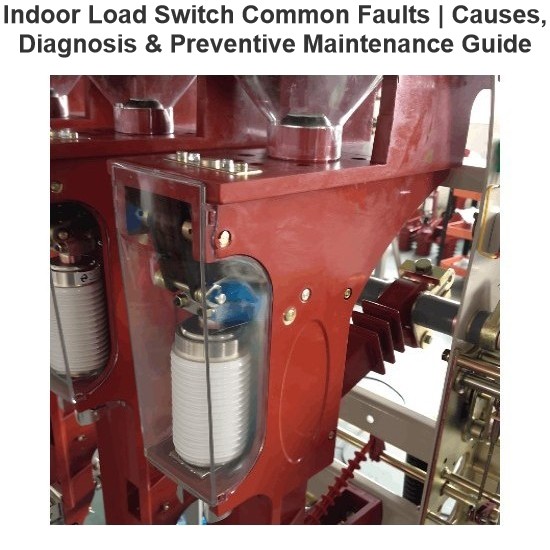
Indoor Load Switch Common Faults | Causes, Diagnosis & Preventive Maintenance Guide
Common operational faults of indoor load switches primarily concentrate on three core aspects: mechanical operation, electrical performance, insulation, and arc extinguishing. These issues can be broadly categorized as follows and are often related to component aging, environmental influences, or improper operation.1.Mechanical Faults The most typical issue is abnormal operation during opening and closing. This includes excessive resistance, jamming, or even refusal to operate when manually turn
08/27/2025
Consult
Tip
Consult
Tip
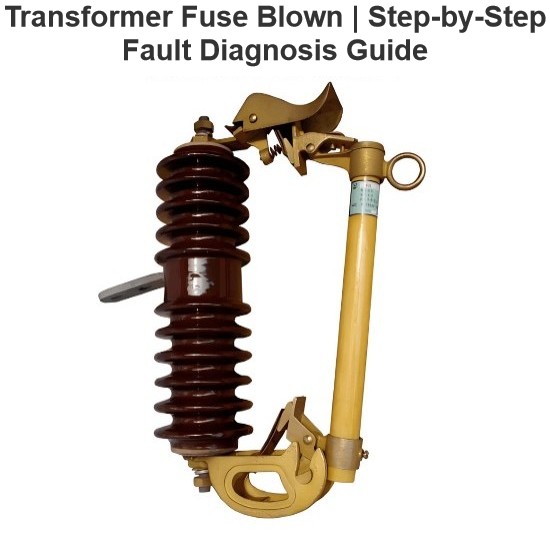
Transformer Fuse Blown | Step-by-Step Fault Diagnosis Guide
If the fuse element on the high-voltage side of the transformer blows or the circuit trips, the first step is to determine whether one phase, two phases, or all three phases are interrupted. This can be determined according to the fault symptoms as shown in the following table:When a fuse element blows, first check whether the high-voltage side fuse or the lightning arrester gap has short-circuited to ground. If no abnormalities are found during external inspection, it can be concluded that an i
08/26/2025
Consult
Tip
Consult
Tip
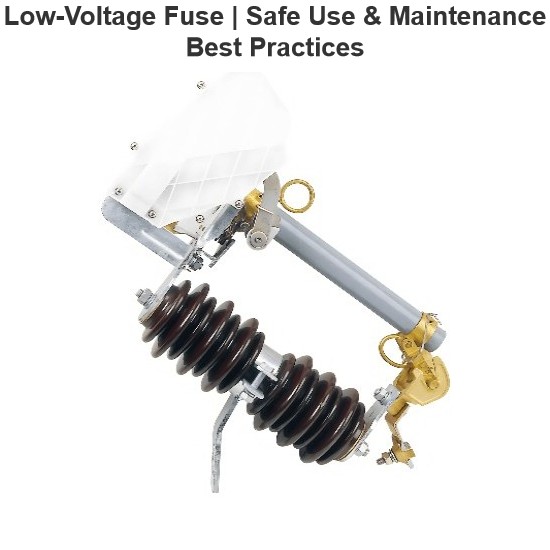
Low-Voltage Fuse | Safe Use & Maintenance Best Practices
Use and MaintenanceIn low-voltage power distribution systems, fuses are protective electrical devices. Widely used for power grid and electrical equipment protection, fuses automatically cut off circuits when short circuits or overloads occur in the grid or equipment, preventing damage to electrical devices and preventing accidents from spreading.A fuse consists of an insulating base (or support), contacts, and a fuse element. The fuse element is the primary working component, acting like a spec
08/26/2025
Consult
Tip
Consult
Tip
Reliability Analysis of Fault Current Limiters in High-Voltage Substations
1 IntroductionTo meet the rapidly growing demand for electric energy, power generation, transmission, and distribution systems must develop accordingly. One of the critical issues arising from this development is the rapid increase in short-circuit currents. The rise in short-circuit currents leads to several hazards:overheating of series-connected devices along the fault path;increased transient and recovery voltages during current interruption, which may damage insulation systems;generation of
08/25/2025
Consult
Tip
Consult
Tip
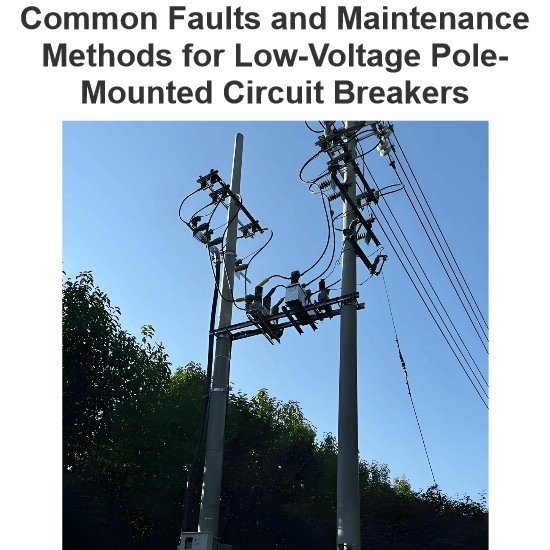
Common Faults and Maintenance Methods for Low-Voltage Pole-Mounted Circuit Breakers
Common Faults and Maintenance Methods for Low-Voltage Pole-Mounted Circuit BreakersLow-voltage pole-mounted circuit breakers, as key protective devices in distribution networks, are widely used in connection, segmentation, and branch locations of 10kV overhead lines. Operating long-term in harsh outdoor environments, they face multiple challenges including electrical performance degradation, mechanical component wear, and the impact of environmental factors.Structural Features and Working Princi
08/21/2025
Consult
Tip
Consult
Tip
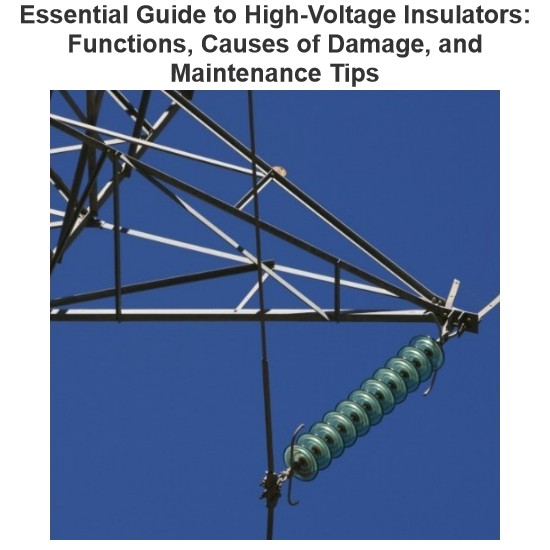
Essential Guide to High-Voltage Insulators: Functions, Causes of Damage, and Maintenance Tips
Insulators are typically made of porcelain material and are therefore also known as porcelain insulators. They have a dense structure with a glazed surface to enhance electrical insulation performance. Insulators for different voltage levels have varying effective heights and surface configurations. The higher the voltage level, the longer the insulator and the greater the number of sheds.1. Functions of InsulatorsHigh-voltage insulators must possess sufficient electrical insulation strength and
08/20/2025
Consult
Tip
Consult
Tip
Common faults of insulators and preventive measures
An insulator is a special type of insulating component that serves the dual purpose of supporting conductors and preventing current from grounding in overhead transmission lines. It is widely used at the connection points between transmission towers and conductors, as well as between substation structures and power lines. Based on the dielectric material, insulators are classified into three types: porcelain, glass, and composite. Analyzing common insulator faults and preventive maintenance meas
08/20/2025
Consult
Tip
Consult
Tip
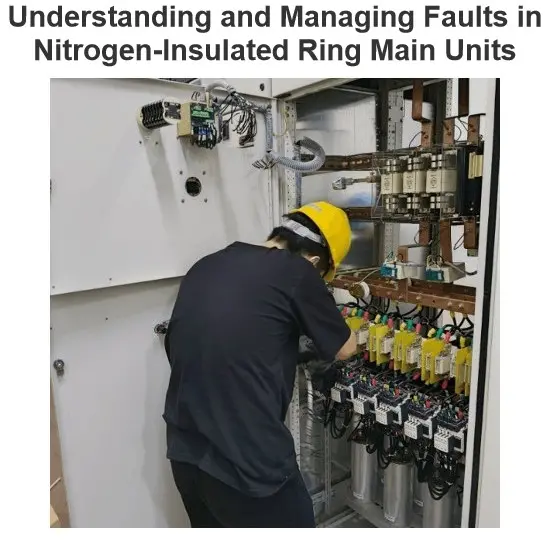
Understanding and Managing Faults in Nitrogen-Insulated Ring Main Units
1. Gas System FaultsThe most critical type of fault in environmentally friendly gas-insulated ring main units is related to the gas system, primarily involving gas leakage and pressure anomalies. Gas leakage in nitrogen-insulated ring main units mainly stems from seal material aging and welding process defects. Statistics indicate that approximately 65% of gas leakage faults are related to O-ring aging, while 30% are caused by inadequate welding. Gas leakage not only affects insulation performan
08/13/2025
Consult
Tip
Consult
Tip
Send inquiry
+86
Click to upload file
Download
Get the IEE Business Application
Use the IEE-Business app to find equipment, obtain solutions, connect with experts, and participate in industry collaboration anytime, anywhere—fully supporting the development of your power projects and business.