• Product
  • Suppliers
  • Manufacturers
  • Solutions
  • Free tools
  • Knowledges
  • Experts
  • Communities
Search


Free Expert Guides on Power Systems, Circuit Design & Electrical Troubleshooting

Access free engineering resources from IEE Business—covering power design, circuit layout, equipment selection, and troubleshooting. Expert-developed guides help engineers, procurement, and project teams make better decisions. Stay ahead on smart grids, renewables, efficiency, and AI tools. Improve reliability, reduce downtime, and enhance outcomes with real-world solutions. Explore our knowledge hub today.
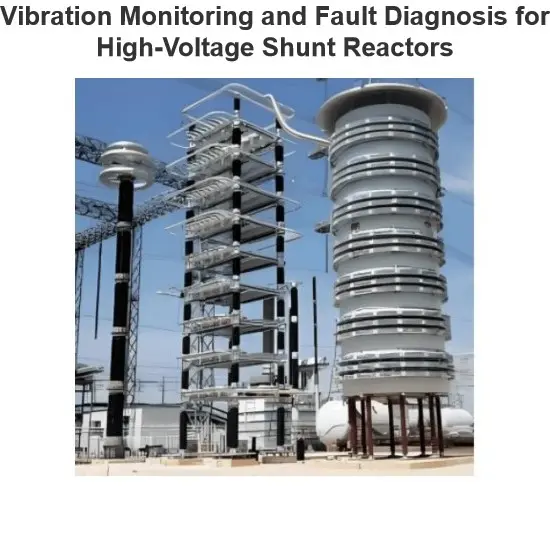
Vibration Monitoring and Fault Diagnosis for High-Voltage Shunt Reactors
1 Vibration Monitoring and Fault Diagnosis Technology for High - Voltage Shunt Reactors1.1 Measuring Point Layout StrategyVibration characteristic parameters (frequency, power, energy) of high - voltage shunt reactors are fully recorded in operation logs. For vibration analysis, focus on resolving the complexity of electric field distribution at winding ends. Quantitatively evaluate field - strength distribution under operating/lightning overvoltage and voltage gradient characteristics of longit
07/24/2025
Consult
Tip
Consult
Tip
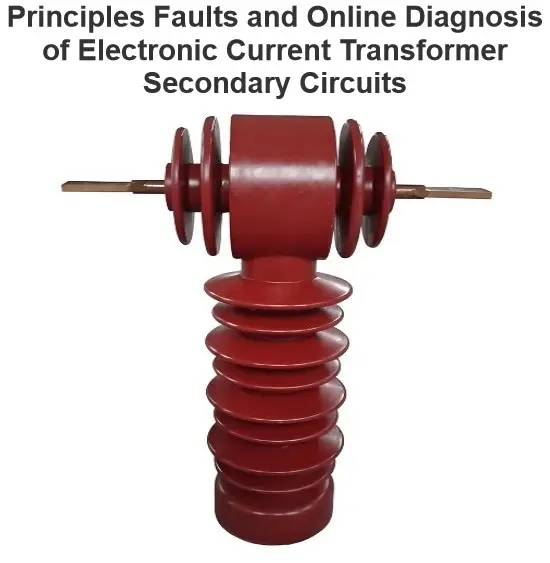
Principles Faults and Online Diagnosis of Electronic Current Transformer Secondary Circuits
1 Principle and Role of Electronic Current Transformers1.1 Working Principle of ECTAn Electronic Current Transformer (ECT) is a key device for managing safe power system operations, converting large currents into manageable small-current signals for measurement and control. Unlike traditional transformers (relying on direct magnetic field interaction between primary and secondary windings), ECTs use sensors (e.g., Hall effect sensors) to detect magnetic field changes from the primary winding. Th
07/22/2025
Consult
Tip
Consult
Tip
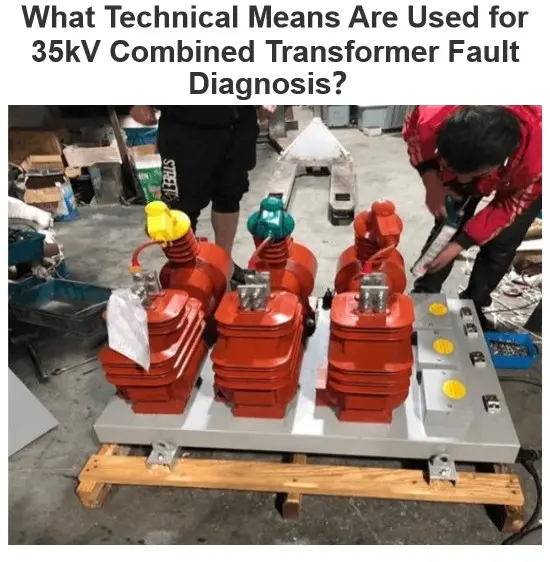
What Technical Means Are Used for 35kV Combined Transformer Fault Diagnosis?
For fault diagnosis and handling of 35kV combined transformers, the following technical means can be adopted:Insulation Fault DiagnosisUse equipment such as high-voltage test transformers, power frequency withstand voltage testers, and partial discharge detection systems to conduct a comprehensive assessment of the insulation performance of combined transformers. When the insulation resistance is found to be lower than 1000MΩ or the dielectric loss factor tanδ exceeds 0.5%, a
07/21/2025
Consult
Tip
Consult
Tip
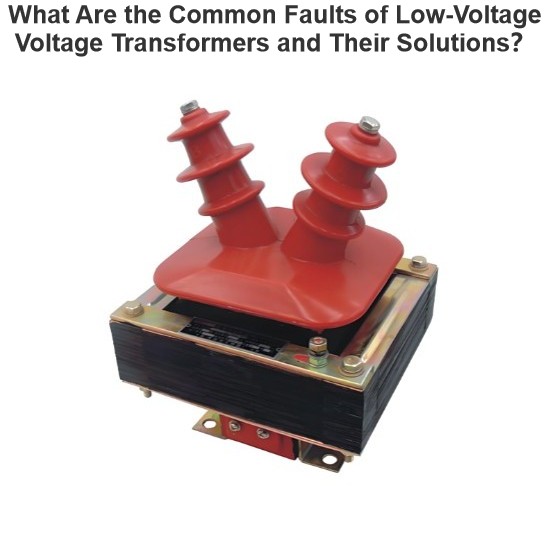
What Are the Common Faults of Low-Voltage Voltage Transformers and Their Solutions?
Open - Circuit Fault on the Secondary SideOpen - circuit in the secondary side is a typical fault of low - voltage voltage transformers, showing abnormal voltmeter readings (zero/fluctuation), faulty power meters, buzzing noises, and core overheating. When open - circuited, the secondary voltage spikes (no secondary current to balance the primary EMF), causing core saturation, flux distortion, and potential overheating/damage.Causes include loose terminals, poor contact, or human error. In low
07/18/2025
Consult
Tip
Consult
Tip
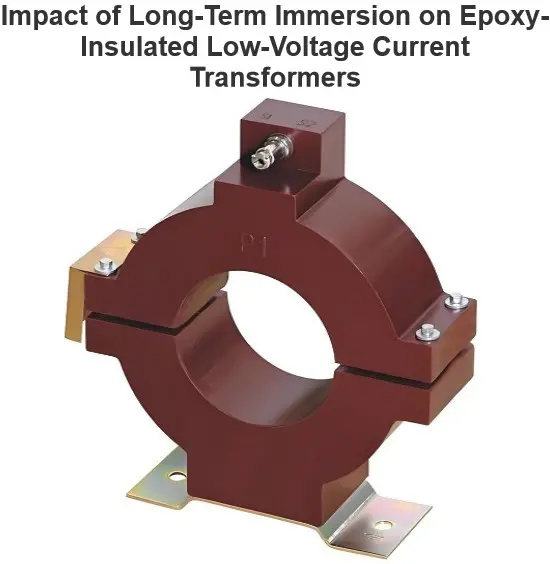
Impact of Long-Term Immersion on Epoxy-Insulated Low-Voltage Current Transformers
1 IntroductionLow - voltage current transformers for metering, with a through - core type epoxy resin structure, are widely used in distribution transformer areas and for small - to - medium - sized industrial and commercial electricity consumption. As a range expander for electric energy metering, their performance directly relates to electricity consumption safety and the accuracy of users' trade calculations. Studying long - term immersion's impact on these transformers is practically signifi
07/17/2025
Consult
Tip
Consult
Tip
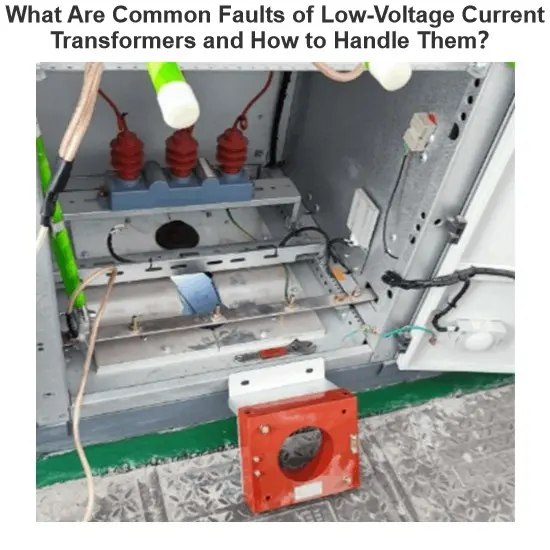
What Are Common Faults of Low-Voltage Current Transformers and How to Handle Them?
Low-voltage current transformers, as indispensable measurement and protection devices in power systems, often encounter various faults when used in combination with other power equipment due to environmental factors, equipment linkage issues, and improper installation and maintenance. These faults not only affect the normal operation of power equipment but may also endanger personal safety. Therefore, it is necessary to gain an in-depth understanding of fault types, judgment methods, and prevent
07/17/2025
Consult
Tip
Consult
Tip
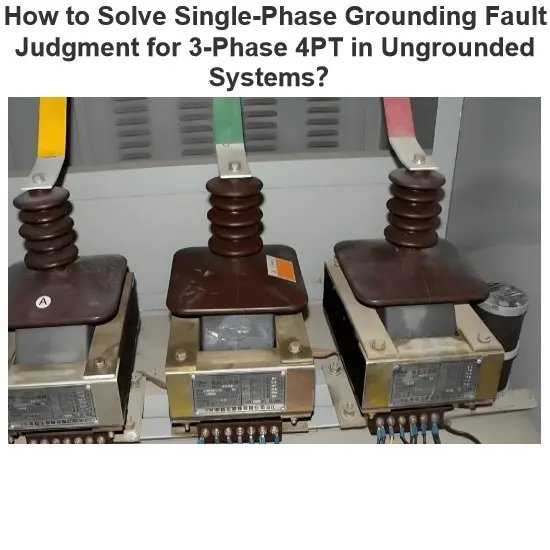
How to Solve Single-Phase Grounding Fault Judgment for 3-Phase 4PT in Ungrounded Systems?
In 10 kV and 35 kV ungrounded systems, single - phase grounding faults cause minimal current, so protection rarely trips. Per regulations, operation is limited to 2 hours; prolonged undetected faults may worsen, even damaging switches. While the State Grid promotes small - current grounding line selection devices in 110 kV and 220 kV substations, their accuracy remains low, requiring monitoring/operation staff to analyze remote measurements. For ungrounded systems with three - phase 4PT voltage
07/15/2025
Consult
Tip
Consult
Tip
What Are the Common Failures of AIS Voltage Transformers?
Hey everyone! I’m Felix, a 10-year veteran in the power system industry. Today, we’re going to dive into an important topic — what are the common failures of Air Insulated Switchgear (AIS) voltage transformers? How do you identify these issues, and how can they be resolved? Let’s get started!1. Insulation DamageThe Problem You Might Encounter:One of the most frequent issues is insulation damage. This typically happens due to aging insulation materials, ove
07/14/2025
Consult
Tip
Consult
Tip
Fault Analysis and Diagnosis on Current Transformer
Current transformers are numerous in substations and are key equipment to ensure the normal operation of the system. If a current transformer fails, it will cause the circuit breaker to trip and may even evolve into a power outage event, which will have an adverse impact on the safe and stable operation of the power grid. Taking an event of the main transformer differential protection operation caused by the failure of the current transformer on the low-voltage side of the main transformer in a
07/14/2025
Consult
Tip
Consult
Tip
What does the maintenance of current transformers involve?
Fault Prevention and Handling of Current Transformers1 Handling of Oil Leakage in Current TransformersOil - immersed current transformers are most prone to oil leakage. Common oil - leakage parts mainly include the secondary outlet box, the upper and lower sealing surfaces of the porcelain sleeve, the oil tank, the base, the oil conservator, and the metal expander.Methods for handling oil leakage: For oil leakage at the secondary outlet box, if the small porcelain sleeve or terminal board is cra
07/14/2025
Consult
Tip
Consult
Tip
Send inquiry
+86
Click to upload file
Download
Get the IEE Business Application
Use the IEE-Business app to find equipment, obtain solutions, connect with experts, and participate in industry collaboration anytime, anywhere—fully supporting the development of your power projects and business.