• Product
  • Suppliers
  • Manufacturers
  • Solutions
  • Free tools
  • Knowledges
  • Experts
  • Communities
Search


Free Expert Guides on Power Systems, Circuit Design & Electrical Troubleshooting

Access free engineering resources from IEE Business—covering power design, circuit layout, equipment selection, and troubleshooting. Expert-developed guides help engineers, procurement, and project teams make better decisions. Stay ahead on smart grids, renewables, efficiency, and AI tools. Improve reliability, reduce downtime, and enhance outcomes with real-world solutions. Explore our knowledge hub today.
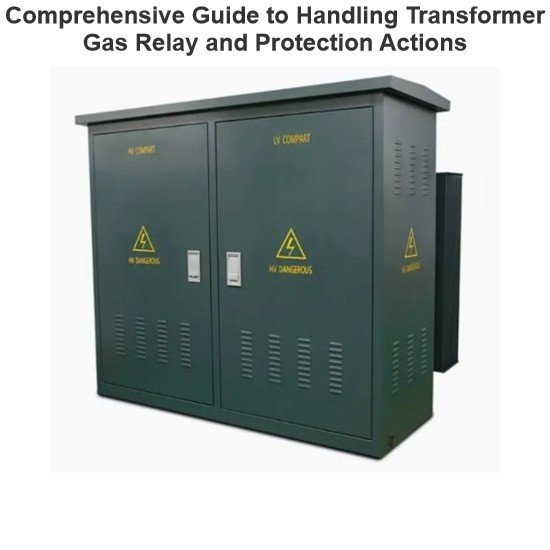
Comprehensive Guide to Handling Transformer Gas Relay and Protection Actions
Handling of Minor Action of Transformer Gas Relay Immediately check and record the protective relay action signals, and report to the dispatcher and station manager. Closely monitor the transformer’s voltage, current, temperature, oil level, oil color, sound, and cooler operation, and assign personnel to conduct an external inspection of the transformer. If significant abnormalities are found during the inspection, report to the dispatcher and take the faulty transformer offline. If no
07/30/2025
Consult
Tip
Consult
Tip
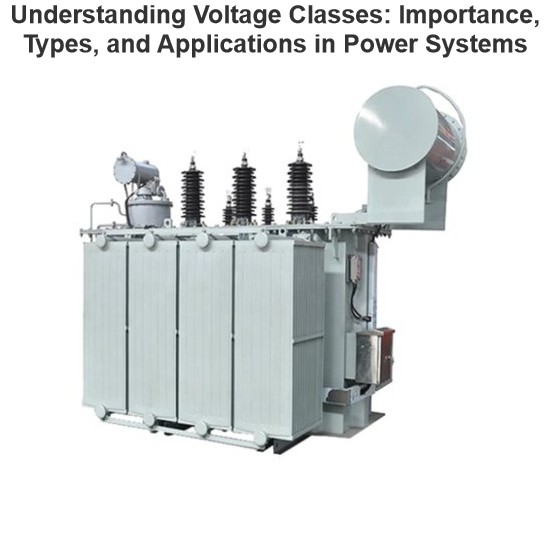
Understanding Voltage Classes: Importance, Types, and Applications in Power Systems
What Is a Voltage Class? Definition of Voltage Class:Voltage classes (or voltage levels) refer to a set of standardized rated voltages used in power systems and electrical equipment. A rated voltage is the nominal voltage at which equipment is designed to operate under normal conditions; essentially, a voltage class defines the intended working voltage range for a system or device. Analogy to Consumer Appliances:Household appliances (e.g., refrigerators, TVs) operate at a nominal voltage&mda
07/30/2025
Consult
Tip
Consult
Tip
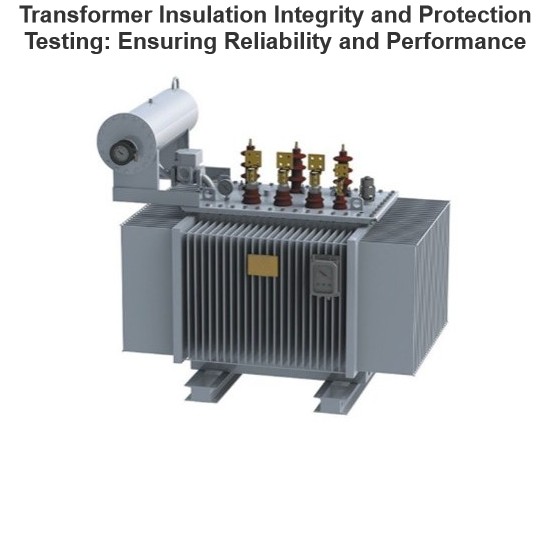
Transformer Insulation Integrity and Protection Testing: Ensuring Reliability and Performance
Verification of Insulation IntegrityWhen a new or overhauled transformer is energized under open-circuit (no-load) conditions, switching surges—caused by operations such as opening or closing the no-load transformer circuit—can generate overvoltages. These reach 4.0–4.5 times the phase voltage if the neutral point is isolated or earthed through a Petersen coil, and up to 3.0 times the phase voltage when the neutral is solidly grounded. The full-voltage, no-load impa
07/30/2025
Consult
Tip
Consult
Tip
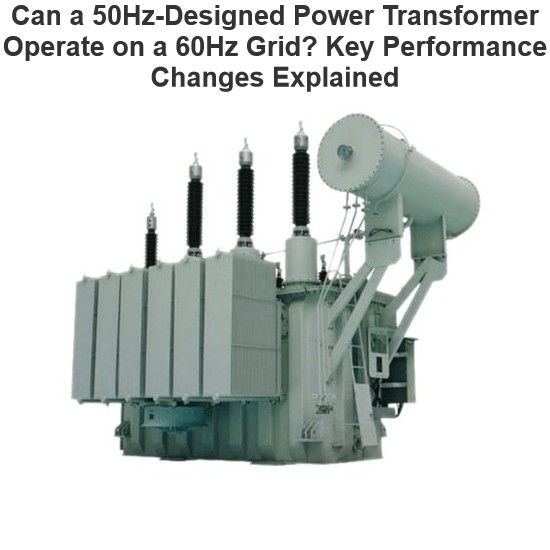
Can a 50Hz-Designed Power Transformer Operate on a 60Hz Grid? Key Performance Changes Explained
Can a 50Hz-Designed Power Transformer Operate on 60Hz Grid?If a power transformer is designed and built for 50Hz, can it run on a 60Hz grid? If so, how do its key performance parameters change?Key Parameter Changes Short-Circuit Impedance:For a given transformer (same voltage and capacity), short-circuit impedance is proportional to frequency. Thus, a 50Hz-designed unit operating at 60Hz sees a 20% increase—higher frequency intensifies alternating leakage field opposition to current. N
07/29/2025
Consult
Tip
Consult
Tip
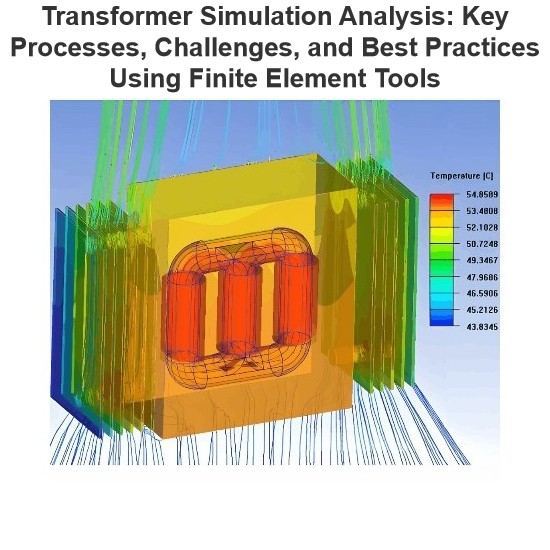
Transformer Simulation Analysis: Key Processes, Challenges, and Best Practices Using Finite Element Tools
1 IntroductionWhether using any finite element analysis software (such as COMSOL, Infolytica, or Ansys) for transformer simulation analysis—whether focusing on electric field, magnetic field, flow field, mechanical field, or acoustic field—the basic process is roughly the same. A true understanding of the key points in each process is the foundation for the success of the simulation analysis and the reliability of the final results.2 Basic Simulation ProcessA scientific and c
07/29/2025
Consult
Tip
Consult
Tip
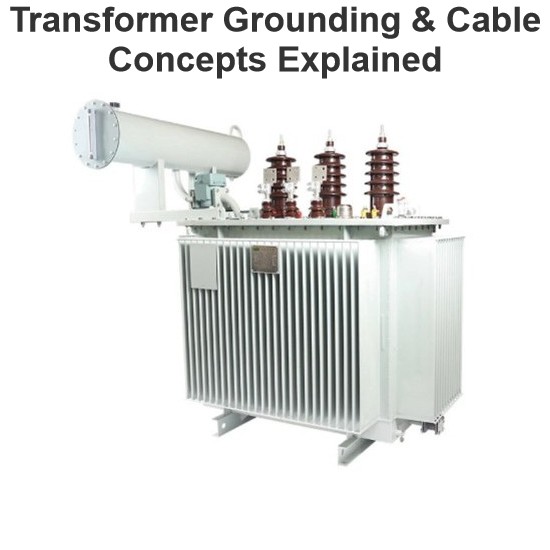
Transformer Grounding & Cable Concepts Explained
Sharing of Transformer Concepts and Terminology The zero-mode impedance of a load is infinite, and its line-mode impedance is also extremely large, approximately 100 times that of the line-mode impedance of the line. The capacitance to ground of a cable is 25-50 times that of an overhead line. The free oscillation frequency of transient capacitive current: 300-1500Hz for overhead lines and 1500-3000Hz for cables. Performance requirements for an external grounding transformer: Under normal power
07/28/2025
Consult
Tip
Consult
Tip
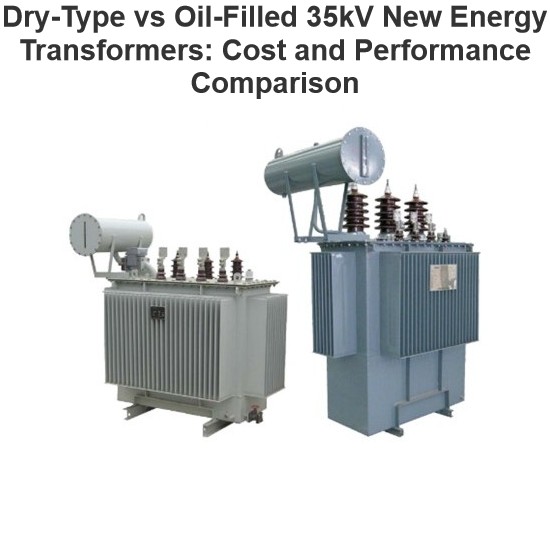
Dry-Type vs Oil-Filled 35kV New Energy Transformers: Cost and Performance Comparison
For users, when purchasing a 35kV new energy transformer, choosing between dry-type, mineral oil-filled, or vegetable oil-filled types involves multiple considerations. These include user habits, maintenance-free performance, safety and fire resistance, volume and weight, among others. However, cost differences are undoubtedly one of the most crucial factors.To illustrate the issue intuitively, this paper selects a three-level energy efficiency dual-winding new energy transformer with a rated ca
07/26/2025
Consult
Tip
Consult
Tip
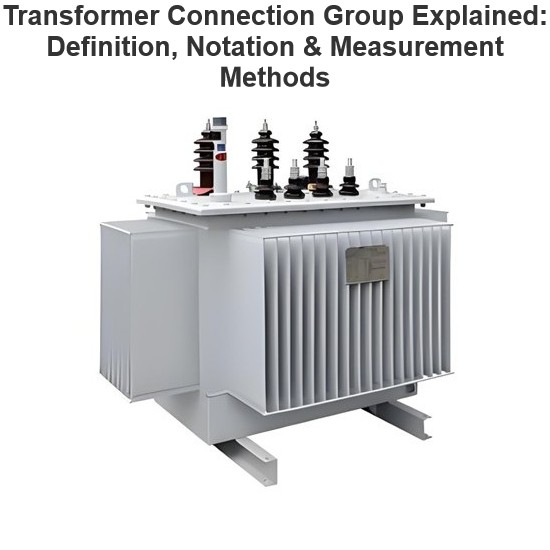
Transformer Connection Group Explained: Definition, Notation & Measurement Methods
Transformer Connection GroupThe connection group of a transformer refers to the phase difference between the primary and secondary voltages or currents. It is determined by the winding directions of the primary and secondary coils, the labeling of their start and end terminals, and the connection mode. Expressed in a clock-like format, there are 12 groups in total, numbered from 0 to 11.The DC method is commonly used to measure the transformer's connection group, mainly to verify whether the con
07/26/2025
Consult
Tip
Consult
Tip
What is the sequence for powering down the transformer?
The sequence for shutting down a main transformer is as follows: when de-energizing, the load side should be shut down first, followed by the power supply side. For energizing operations, the reverse order applies: the power supply side is energized first, then the load side. This is because: Energizing from the power supply side to the load side makes it easier to identify the fault range and take prompt judgment and handling measures in case of a fault, preventing the fault from spreading or e
07/26/2025
Consult
Tip
Consult
Tip
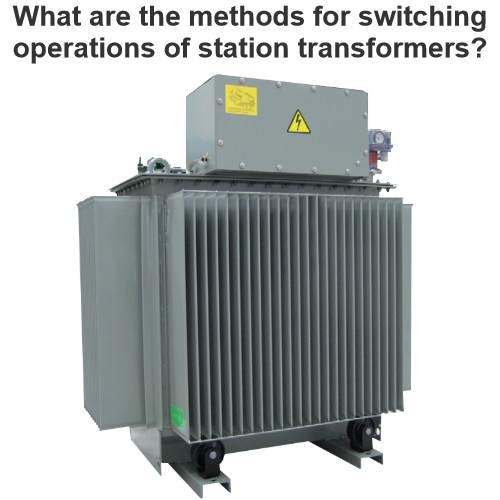
What are the methods for switching operations of station transformers?
Let's take an auxiliary power system with two station transformers as an example. When one station transformer needs to be out of service, there are two operation methods: non-interruptive power supply and instantaneous power interruption. Generally, the method of instantaneous power interruption on the low-voltage side is preferred.The operation method for instantaneous power interruption on the low-voltage side is as follows: Open the 380V power incoming circuit breaker of the corresponding se
07/26/2025
Consult
Tip
Consult
Tip
Send inquiry
+86
Click to upload file
Download
Get the IEE Business Application
Use the IEE-Business app to find equipment, obtain solutions, connect with experts, and participate in industry collaboration anytime, anywhere—fully supporting the development of your power projects and business.