• Product
  • Suppliers
  • Manufacturers
  • Solutions
  • Free tools
  • Knowledges
  • Experts
  • Communities
Search


Free Expert Guides on Power Systems, Circuit Design & Electrical Troubleshooting

Access free engineering resources from IEE Business—covering power design, circuit layout, equipment selection, and troubleshooting. Expert-developed guides help engineers, procurement, and project teams make better decisions. Stay ahead on smart grids, renewables, efficiency, and AI tools. Improve reliability, reduce downtime, and enhance outcomes with real-world solutions. Explore our knowledge hub today.
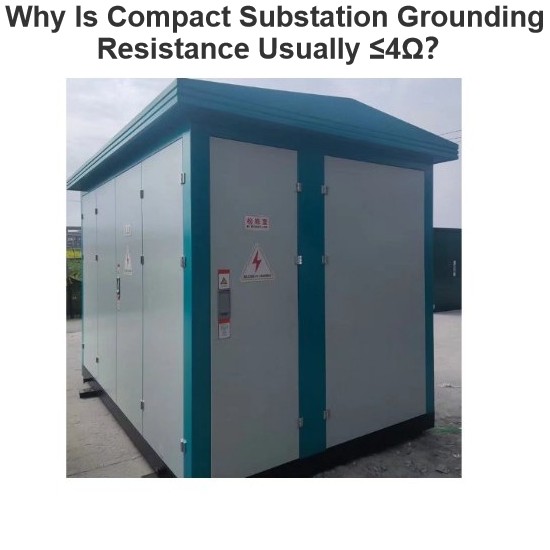
Why Is Compact Substation Grounding Resistance Usually ≤4Ω?
As a key power distribution equipment, the safe operation of a compact substation relies on reliable grounding measures. People often wonder: Why is the grounding resistance of a compact substation generally required to be no more than 4Ω? Behind this value, there are rigorous technical bases and application scenario restrictions. In fact, the requirement of ≤4Ω is not mandatory in all cases. It mainly applies to scenarios where the high - voltage system adopts "ungrou
07/23/2025
Consult
Tip
Consult
Tip
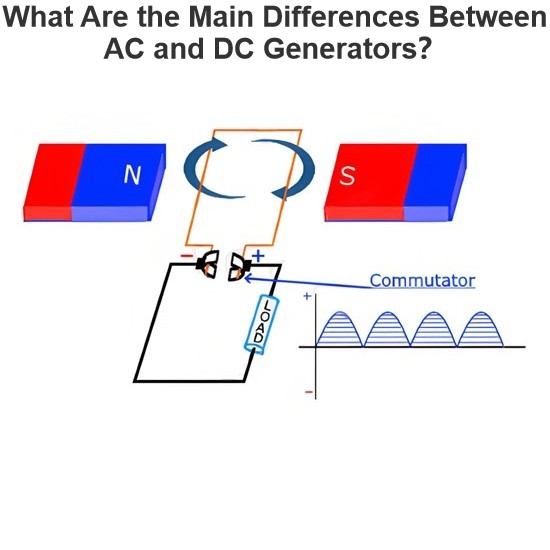
What Are the Main Differences Between AC and DC Generators?
Main Differences Between AC and DC GeneratorsAn electrical machine is a device that converts mechanical energy into electrical energy and vice versa. A generator is a type of such machine that converts mechanical energy into electrical energy. However, the electrical energy generated can be in either alternating current (AC) or direct current (DC) form. Thus, the primary difference between AC and DC generators is that they generate alternating current and direct current respectively. While there
07/18/2025
Consult
Tip
Consult
Tip
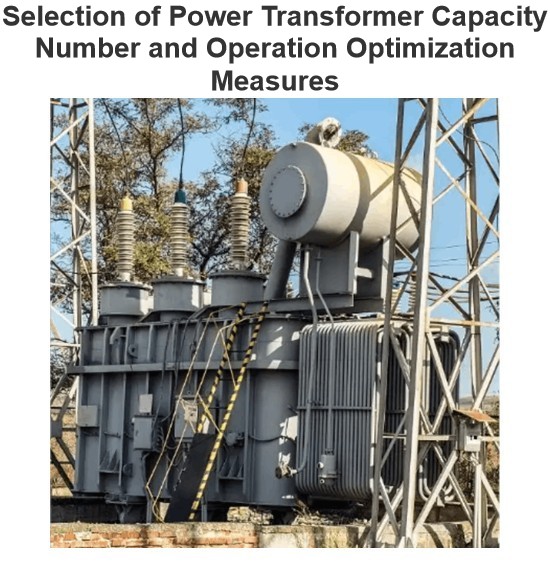
Selection of Power Transformer Capacity Number and Operation Optimization Measures
The safe and economical operation of power transformers is related to the safety, economy, stability, and reliability of the operations of various industries. The limitations of conditions such as the investment economic indicators for its selection, the economic benefits of maintenance and operation, and the adaptability in the new environment (access of distributed power sources, configuration of energy storage, etc.) make it impossible to include comprehensive factors in other aspects.The cap
07/17/2025
Consult
Tip
Consult
Tip
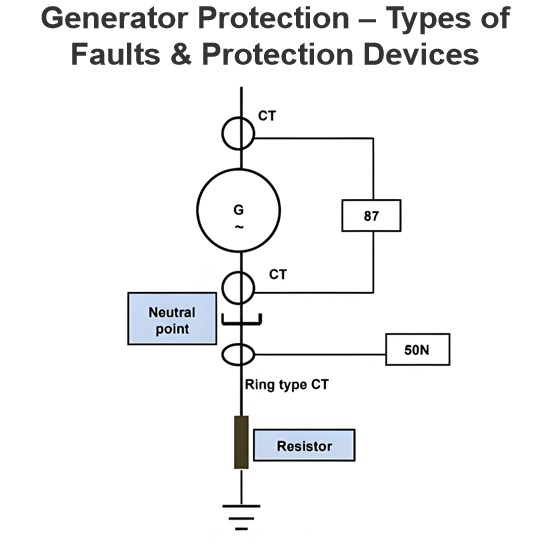
Generator Protection – Types of Faults & Protection Devices
Common Generator Faults and Protection SystemsClassification of Generator FaultsGenerator faults are primarily categorized into internal and external types: Internal Faults: Arise from issues within generator components. External Faults: Stem from abnormal operating conditions or external network issues.Faults in prime movers (e.g., diesel engines, turbines) are mechanical in nature and defined during equipment design, though they must integrate with generator protections for tripping purposes.T
06/05/2025
Consult
Tip
Consult
Tip
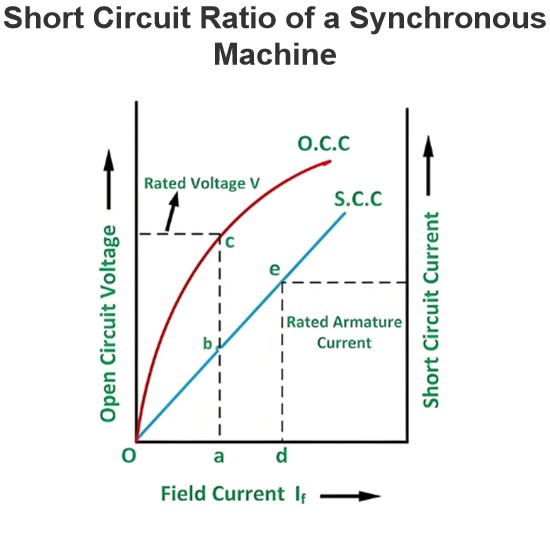
Short Circuit Ratio of a Synchronous Machine
The Short Circuit Ratio (SCR) of a Synchronous MachineThe Short Circuit Ratio (SCR) of a synchronous machine is defined as the ratio of the field current needed to generate rated voltage under open-circuit conditions to the field current required to sustain rated armature current during a short-circuit condition. For a three-phase synchronous machine, the SCR can be derived from its Open-Circuit Characteristic (O.C.C) at rated speed and Short-Circuit Characteristic (S.C.C), as illustrated in the
06/04/2025
Consult
Tip
Consult
Tip
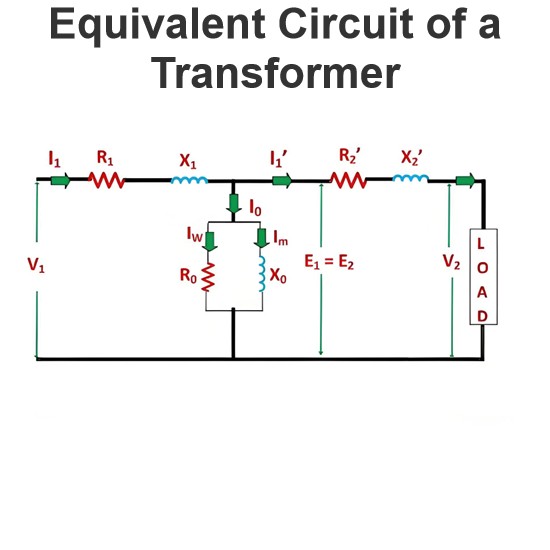
Equivalent Circuit of a Transformer
The equivalent circuit diagram of any device can be extremely useful for predicting how the device will behave under different operating conditions. It is essentially a circuit - based depiction of the equations that describe the device's performance.The simplified equivalent circuit of a transformer is constructed by representing all of the transformer's parameters on either the secondary side or the primary side. The equivalent circuit diagram of the transformer is presented below:Let the equi
06/03/2025
Consult
Tip
Consult
Tip
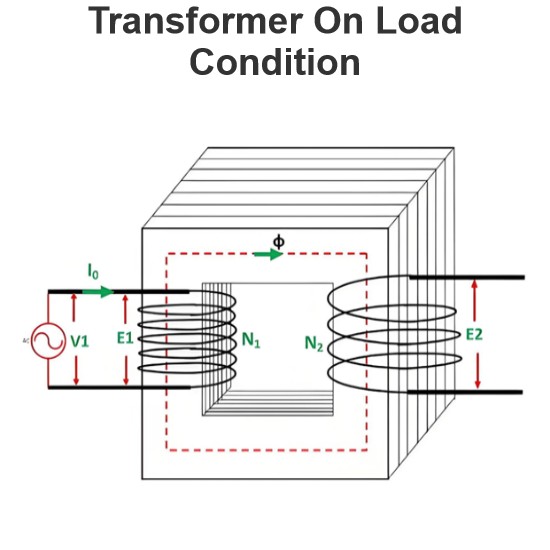
Transformer On Load Condition
Transformer Operation Under Load ConditionsWhen a transformer is under load, its secondary winding connects to a load, which can be resistive, inductive, or capacitive. A current I2 flows through the secondary winding, with its magnitude determined by the terminal voltageV2and load impedance. The phase angle between the secondary current and voltage depends on the load characteristics.Explanation of Transformer Load OperationThe operational behavior of a transformer under load is detailed as fol
06/03/2025
Consult
Tip
Consult
Tip
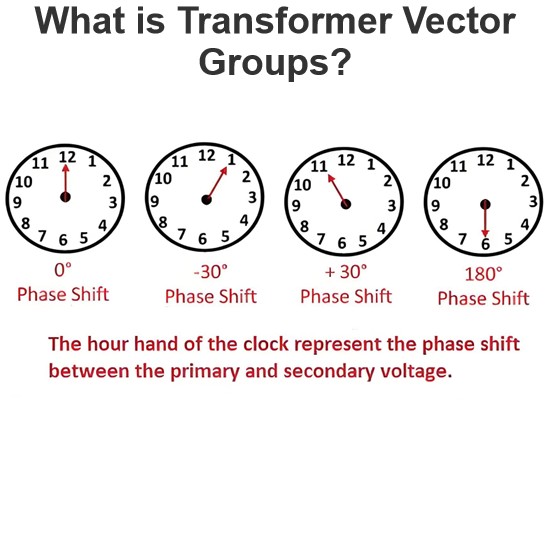
What is Transformer Vector Groups?
Transformer Vector Group DefinitionThe transformer vector group denotes the phase difference between the primary and secondary sides of a transformer, while also defining the arrangement of high-voltage and low-voltage windings in three-phase transformers. Vector groups are determined by the connection configurations of three-phase transformers, which can be categorized into four main groups based on the phase difference between corresponding line voltages of the high-voltage and low-voltage sid
06/02/2025
Consult
Tip
Consult
Tip
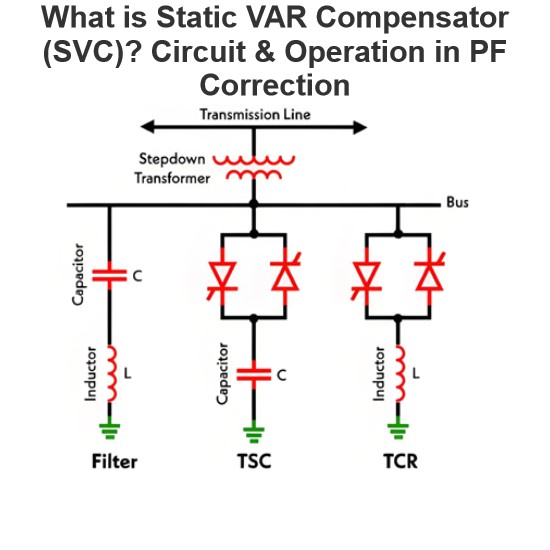
What is Static VAR Compensator (SVC)? Circuit & Operation in PF Correction
What is a Static VAR Compensator (SVC)?A Static VAR Compensator (SVC), also termed a Static Reactive Compensator, is a critical device for enhancing the power factor in electrical power systems. As a type of static reactive power compensation equipment, it injects or absorbs reactive power to maintain optimal voltage levels, ensuring stable grid operation.An integral part of the Flexible AC Transmission System (FACTS), an SVC comprises a bank of capacitors and reactors controlled by power electr
05/30/2025
Consult
Tip
Consult
Tip
Transformer on No Load Condition
No-Load Operation of TransformerWhen a transformer operates under no-load conditions, its secondary winding is open-circuited, eliminating load on the secondary side and resulting in zero secondary current. The primary winding carries a small no-load currentI0, comprising 2 to 10% of the rated current. This current supplies iron losses (hysteresis and eddy current losses) in the core and minimal copper losses in the primary winding.The lag angle ofI0is determined by transformer losses, with the
05/28/2025
Consult
Tip
Consult
Tip
Send inquiry
+86
Click to upload file
Download
Get the IEE Business Application
Use the IEE-Business app to find equipment, obtain solutions, connect with experts, and participate in industry collaboration anytime, anywhere—fully supporting the development of your power projects and business.